Sunday, February 09, 2014

Paper Umbrella Making Factory , Chiang Mai

On the way back from Chiang Rai to Chiang Mai on 25 January 2014, we were taken to the SA Paper & Umbrella Handicraft Centre.

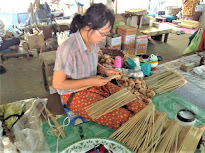
As it turned out, this is a very educational tour where visitors are shown the various steps in the making of the paper umbrella. Starting from soaking the tree barks stripped from Saa tree used to make paper until the application of vanish to the painted umbrella, each step is demonstrated by specific station/worker.

This is the kind of paper umbrella we used to use in our childhood and teenager days. I hated carrying it because it was very bulky. When new, the vanish had a very distinctive unpleasant smell!. There was only one colour to choose from - green. I have not seen this kind of umbrella being sold and used for a very very long time and thought that one could find such item in museum.

Of course, the ladies did not hesitate to add this into the purchase list.

Our tour guide demonstrated the pounding of the barks into pulp.


****************************************

This will dot our KK landscape.

Laos, Northern Most of Thailand and Myanmar

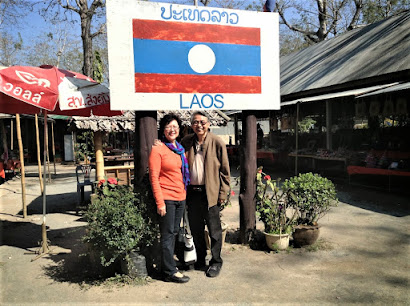
No visa or passport is required to cross from Thailand to Laos.


The minute we landed in Laos, our tour guide quickly pulled me to a store which markets concoctions of alcohol soaked with reptiles and insects: king cobra, scorpion, millipedes etc. To his surprise, I had no hesitation to try it.


This border town which in fact is a "Tamu Ground" which we are familiar with in our own country was set up basically to cater for tourists hoping to buy cheap products and imitation items.


This is the "jetty" where we disembarked upon arrival at Laos territory and departed after spending an hours or so in that country.

****************************************************

This bridge separates the northern most of Thailand and Myanmar.

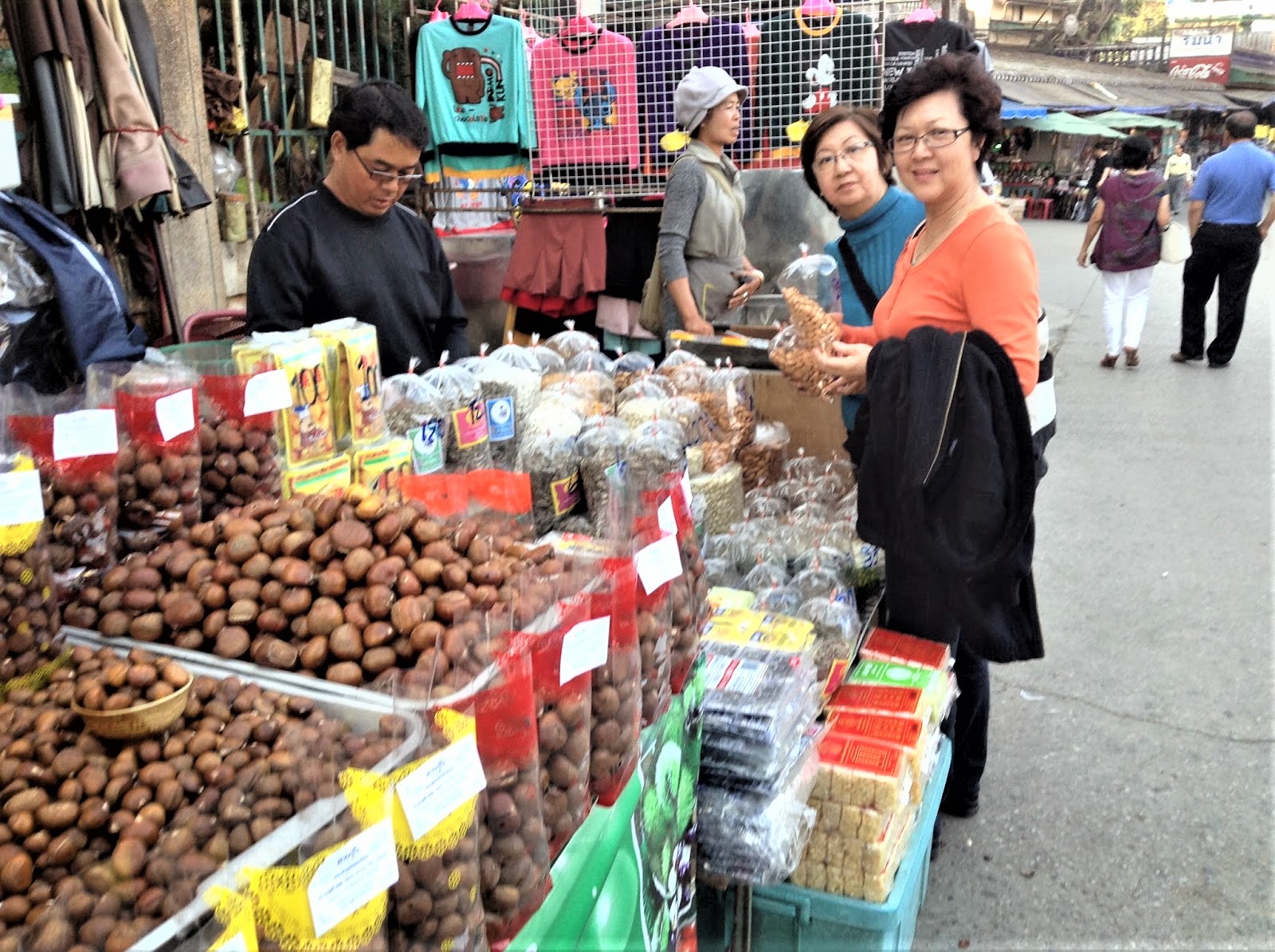
All kinds of things are sold in stores at the northern most of Thailand.

The Golden Triangle

We finally set foot on the Golden Triangle on 24 January 2014. It was exactly eighteen years since the surrender of the drug warlord Khun Sa's Mong Tai Army to the Myanmar government in January 1996. Today, Golden Triangle opens its hands wide to welcome tourists from all nationalities especially those willing to part their monies in the casinos built just along the bank of Mekong River.

Sadly, even after the surrender of Khun Sa's army in 1996, Myanmar's poppies cultivation and drug production has not been totally eliminated and it is still ranked as the second major producer after Afghanistan. In Thailand, we could learn about poppies cultivation, trading and indulgence in the drug in the 212 House of Opium (Museum).


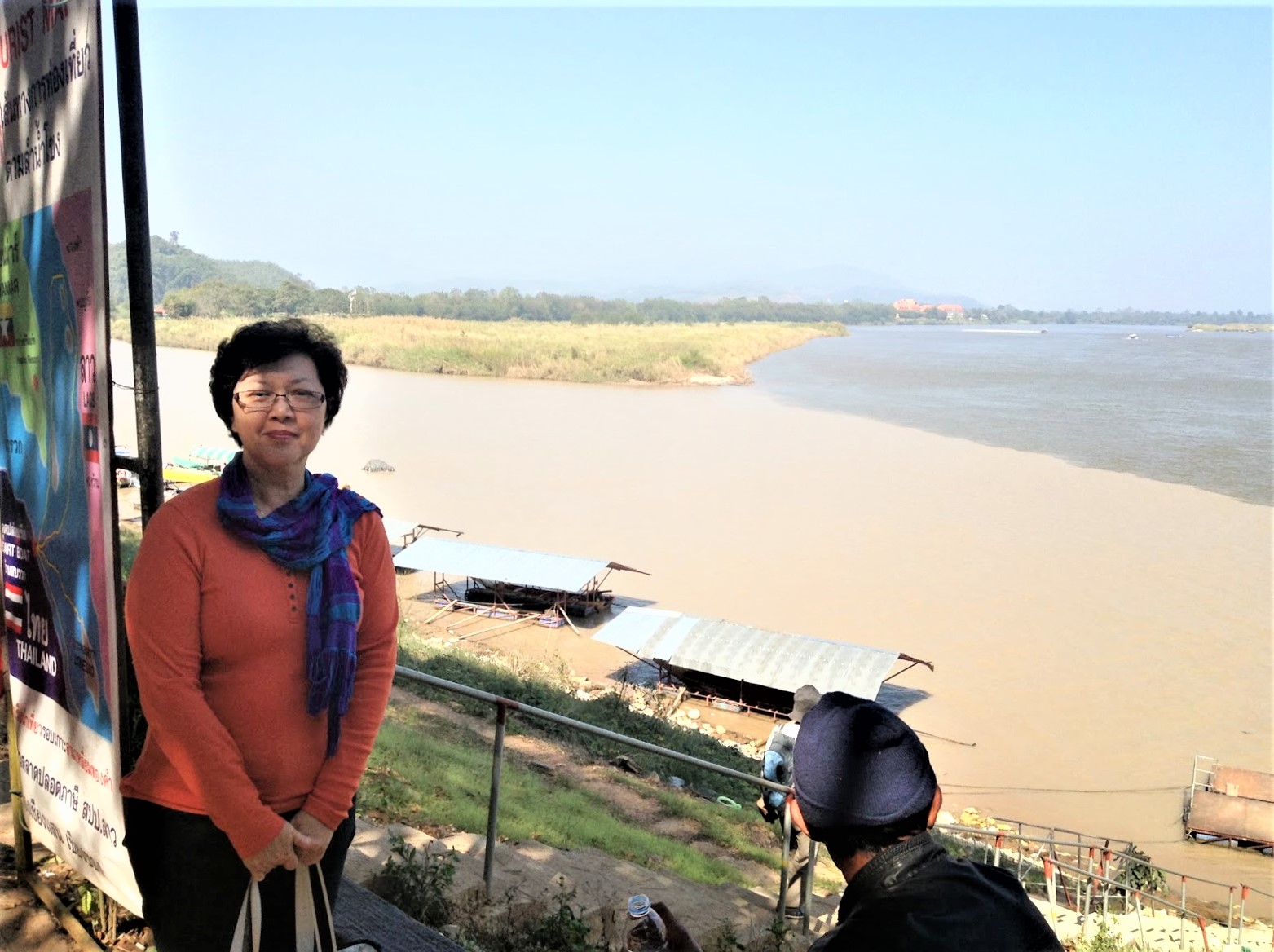
In the Golden Triangle, there is geographically a point in the confluence of Mekong River and Ruak River (a tributary from Thailand) where one can simultaneously be in three countries: Thailand, Myanmar and Laos.

Confluence of Ruak River and Mekong River

Simultaneously in three countries: Thailand, Myanmar and Laos.
.
Paradise Casino, Myanmar.


Our tour guide was a bit disappointed that Thailand being the most developed among the three countries didi not pursue to be the first to build a casino in their side of the Golden Triangle. Somehow, the Thai government decided against it because it was considered taboo to engage in gambling business. Laos and Myanmar also recognized as Buddhist countries decided otherwise. Now they are not only earning money from foreign tourists but also Thai gamblers who cross the borders to try their luck!

Saturday, February 08, 2014

Chiang Rai - The White Temple

Our tour guide only recommended one temple for us to visit throughout the tour. This is the Wat Rong Khun or the White Temple.

The Temple was born out of the devotion of an artist named Chalermchai Kosipipat, a deeply devout Buddhist famed for religious themed paintings. Chalermchai started the temple construction in 1996. After 17 years, only the ornate white main temple hall and the golden toilet have been completed.  A number of other buildings are under various stages of construction and decoration. The complete master plan is expected to take decades to complete. 

The crematorium

************************************


Interestingly, Chalermchai chose white for the temple but golden colour for the toilets. He specifically chose golden colour for the restrooms to reflect worldliness. This is his way of showing the distortions people have about what is truly significant in lives! The toilets complex is indeed a luxurious building. It is manned and cleaned by volunteers.

*****************************************


Many people be they adults and students come to the Temple to spend a couple of weeks or months providing free service to complete decorative items for the building complex.

In the past, the Chinese and the Egyptians built the Great Wall and the Pyramids by forced labour. Today, it is still possible to build iconic buildings and structures with free labour ostensibly drawn by a conviction to a religion.


The building is partially completed and appeared abandoned. It was said that Chalermchai would not accept donation that is deemed "dirty money" to complete his construction works.

Life-sized photo of Chalermchai Kosipipat.


An air-conditioned art gallery built next to the temple hall contains art works done by Chalermchai over the years. I believe not all would look at his art works favourably. This painting entitled "Love Each Other for World Peace" may be one such example!