Sunday, February 09, 2014

Laos, Northern Most of Thailand and Myanmar

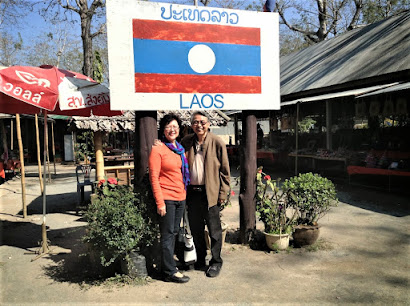
No visa or passport is required to cross from Thailand to Laos.


The minute we landed in Laos, our tour guide quickly pulled me to a store which markets concoctions of alcohol soaked with reptiles and insects: king cobra, scorpion, millipedes etc. To his surprise, I had no hesitation to try it.


This border town which in fact is a "Tamu Ground" which we are familiar with in our own country was set up basically to cater for tourists hoping to buy cheap products and imitation items.


This is the "jetty" where we disembarked upon arrival at Laos territory and departed after spending an hours or so in that country.

****************************************************

This bridge separates the northern most of Thailand and Myanmar.

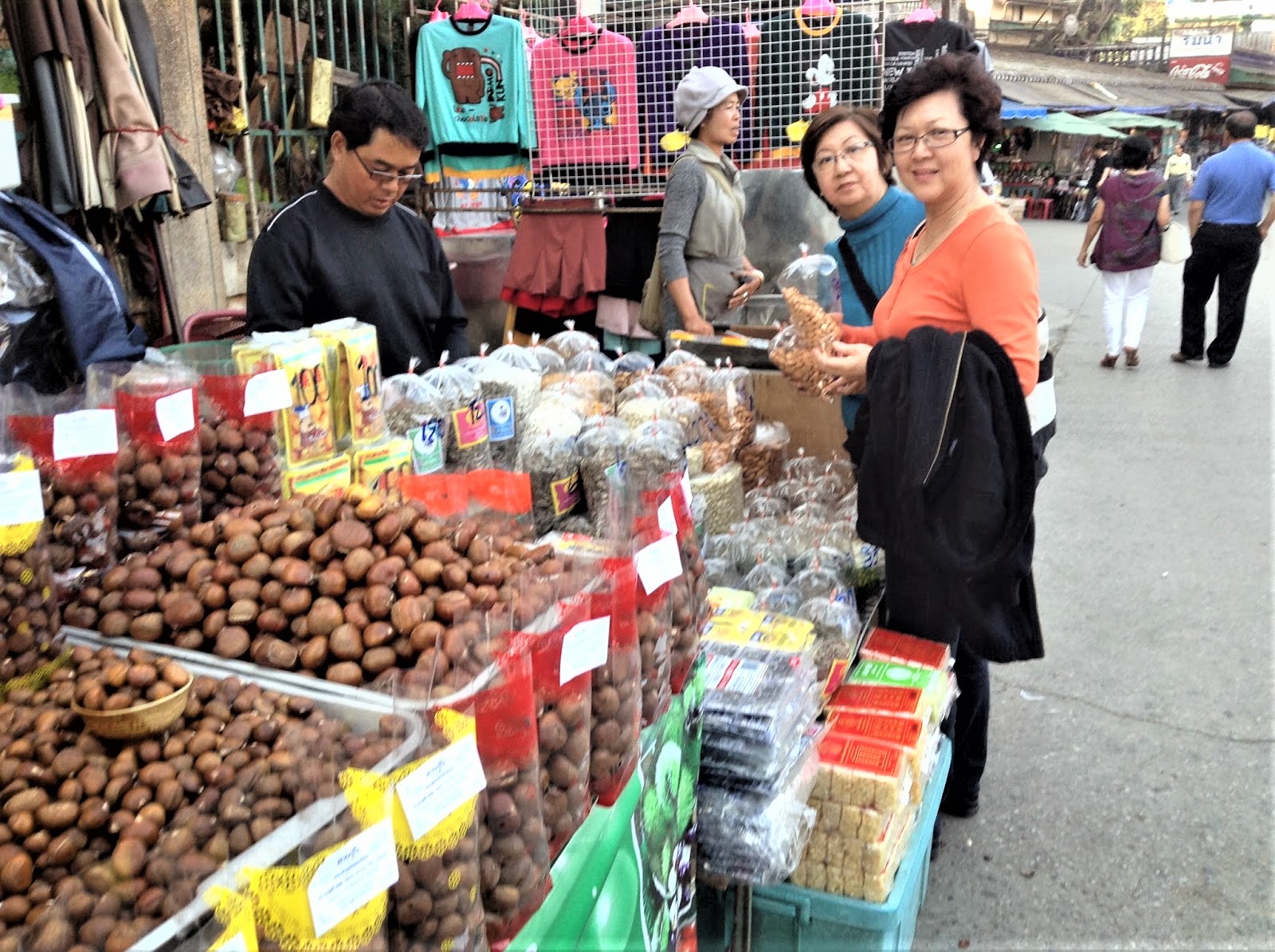
All kinds of things are sold in stores at the northern most of Thailand.

The Golden Triangle

We finally set foot on the Golden Triangle on 24 January 2014. It was exactly eighteen years since the surrender of the drug warlord Khun Sa's Mong Tai Army to the Myanmar government in January 1996. Today, Golden Triangle opens its hands wide to welcome tourists from all nationalities especially those willing to part their monies in the casinos built just along the bank of Mekong River.

Sadly, even after the surrender of Khun Sa's army in 1996, Myanmar's poppies cultivation and drug production has not been totally eliminated and it is still ranked as the second major producer after Afghanistan. In Thailand, we could learn about poppies cultivation, trading and indulgence in the drug in the 212 House of Opium (Museum).


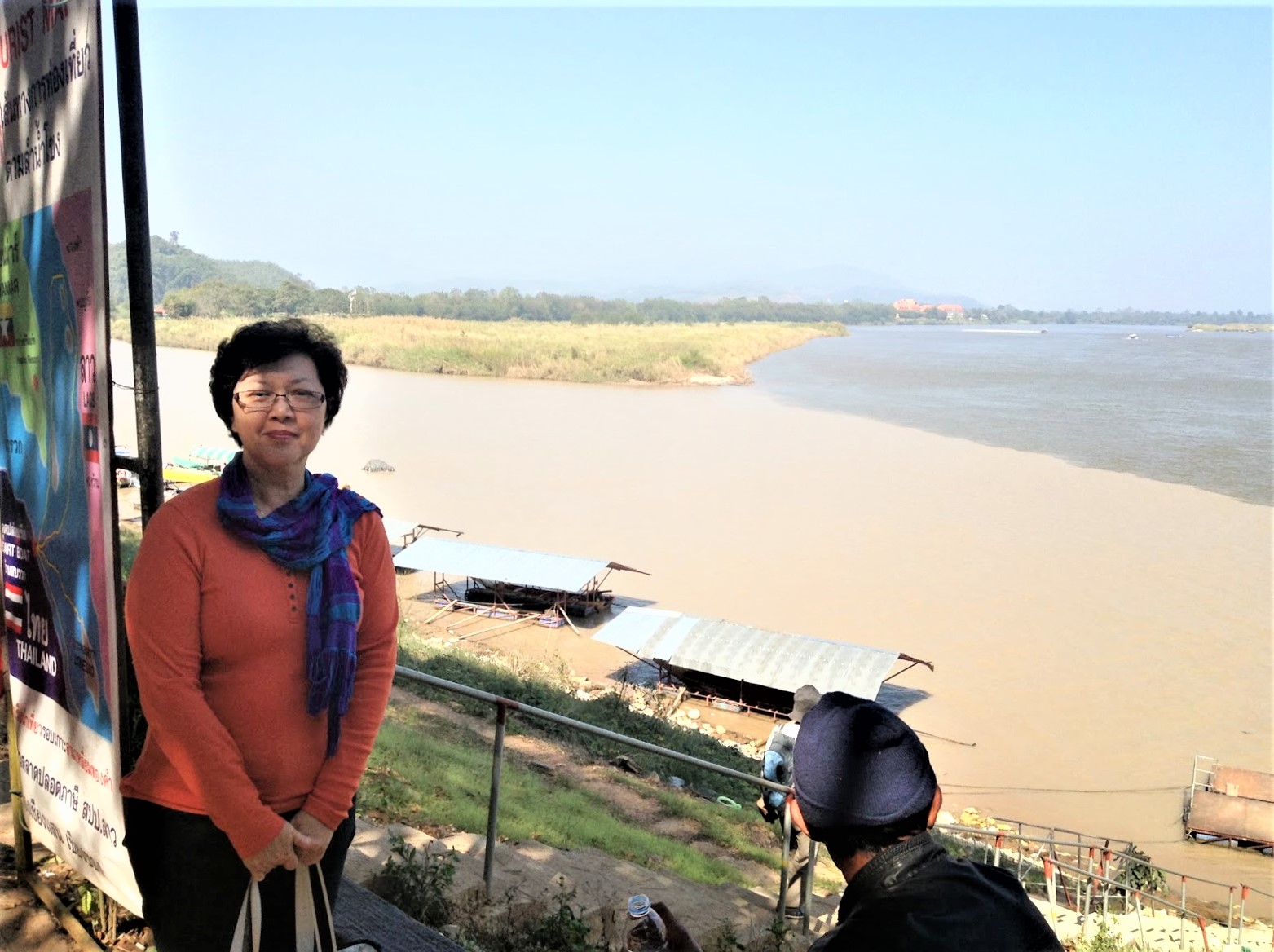
In the Golden Triangle, there is geographically a point in the confluence of Mekong River and Ruak River (a tributary from Thailand) where one can simultaneously be in three countries: Thailand, Myanmar and Laos.

Confluence of Ruak River and Mekong River

Simultaneously in three countries: Thailand, Myanmar and Laos.
.
Paradise Casino, Myanmar.


Our tour guide was a bit disappointed that Thailand being the most developed among the three countries didi not pursue to be the first to build a casino in their side of the Golden Triangle. Somehow, the Thai government decided against it because it was considered taboo to engage in gambling business. Laos and Myanmar also recognized as Buddhist countries decided otherwise. Now they are not only earning money from foreign tourists but also Thai gamblers who cross the borders to try their luck!

Saturday, February 08, 2014

Chiang Rai - The White Temple

Our tour guide only recommended one temple for us to visit throughout the tour. This is the Wat Rong Khun or the White Temple.

The Temple was born out of the devotion of an artist named Chalermchai Kosipipat, a deeply devout Buddhist famed for religious themed paintings. Chalermchai started the temple construction in 1996. After 17 years, only the ornate white main temple hall and the golden toilet have been completed.  A number of other buildings are under various stages of construction and decoration. The complete master plan is expected to take decades to complete. 

The crematorium

************************************


Interestingly, Chalermchai chose white for the temple but golden colour for the toilets. He specifically chose golden colour for the restrooms to reflect worldliness. This is his way of showing the distortions people have about what is truly significant in lives! The toilets complex is indeed a luxurious building. It is manned and cleaned by volunteers.

*****************************************


Many people be they adults and students come to the Temple to spend a couple of weeks or months providing free service to complete decorative items for the building complex.

In the past, the Chinese and the Egyptians built the Great Wall and the Pyramids by forced labour. Today, it is still possible to build iconic buildings and structures with free labour ostensibly drawn by a conviction to a religion.


The building is partially completed and appeared abandoned. It was said that Chalermchai would not accept donation that is deemed "dirty money" to complete his construction works.

Life-sized photo of Chalermchai Kosipipat.


An air-conditioned art gallery built next to the temple hall contains art works done by Chalermchai over the years. I believe not all would look at his art works favourably. This painting entitled "Love Each Other for World Peace" may be one such example!

Chiang Rai - Karen Tribal Village

I have read quite a bit about these people and seen them being featured in TV. Indeed to be able to see them in person was an occasion not to be missed in Chiang Rai. However, to some, taking a tour to see these people could be controversial as some liken it to visiting a human zoo.

These long neck people in fact belong to a sub-group of the Karen called the Padaung. They are born with normal neck. It is the weight of the brass rings added around the neck over the years that pushes the collar bones and ribs downwards that creates this long neck illusion.

There are many stories about why these women chose to wear brass rings around their necks in the beginning. One such story is that women being slower runners, they place thick brass rings around their necks to protect their lives in case they are caught up by chasing tigers which bite the necks for the kill.

These days, the Thai government has relocated these people to specific locations and created communities almost solely to meet the interest of tourists. I could see many of these people including younger generations willingly embracing this culture. Whether it is because of monetary benefit or out the desire to sustain this culture, there is really no one single satisfactory answer! Each probably complements the another and vice versa!

At the entrance to the village, all tourists have to pass through a "gate" guarded by two wooden sculptures with the male and female sexual organs explicitly amplified. We were told that the gate is meant to ward off any evil spirit from entering the village. Somehow, it is more an expression of the tribal fertility than anything else!

Each family is given a hut to showcase their handicrafts.

Besides the long neck tribe, there is also the big ears tribe.
Chiang Mai - Tour Agents & Politics

After hearing favourable comments from friends about trips to Chiang Mai, we decided to organize one just before Chinese New Year 2014.

This time, we decided to do it differently. First we purchased our air tickets online, pre-booked the hotels. Then for the local tour, we searched through the internet to look for a good local tour agent. After comparing prices, we decided to go for "Chiang Mai Marvel Travel" run by one chap called Dave. The good thing about him was that he was receptive to our requirement and responded to our email within two hours after we sent it out. His efficiency impressed me.

For four of us, we were given the exclusive use of an 8-seat van, a driver and an English speaking tour guide. We were picked up the minute we landed at Chiang Mai Airport and were picked up from our hotel and sent back to board the departing flight at the final day of our trip. Overall. we were satisfied with the service of this tour agent. However, a word of caution, this tour agent tends to be pro-red rather than pro-yellow in the on-going political tussle between the two major groups in Bangkok. Places promoted by the pro-royalist tour agents are likely to be avoided by this tour agent. Instead, tourists are more likely led to attractions that would contribute to the well being of  the rural masses.

We spent two nights at Chiang Rai and two nights at Chiang Mai. At Chiang Rai, we stayed at Nak Nakara Hotel which is situated near to Chiang Rai Airport. Walking Street and Night Bazaar are all within walking distance. The hotel setting particularly the central courtyard reminded me of Barahineban hostel Paul once stayed in the University of Newcastle, Australia.

Nak Nakara Hotel

Barahineban, University of Newcastle, Australia.