Thursday, April 27, 2017

Hoa Lu Tam Coc

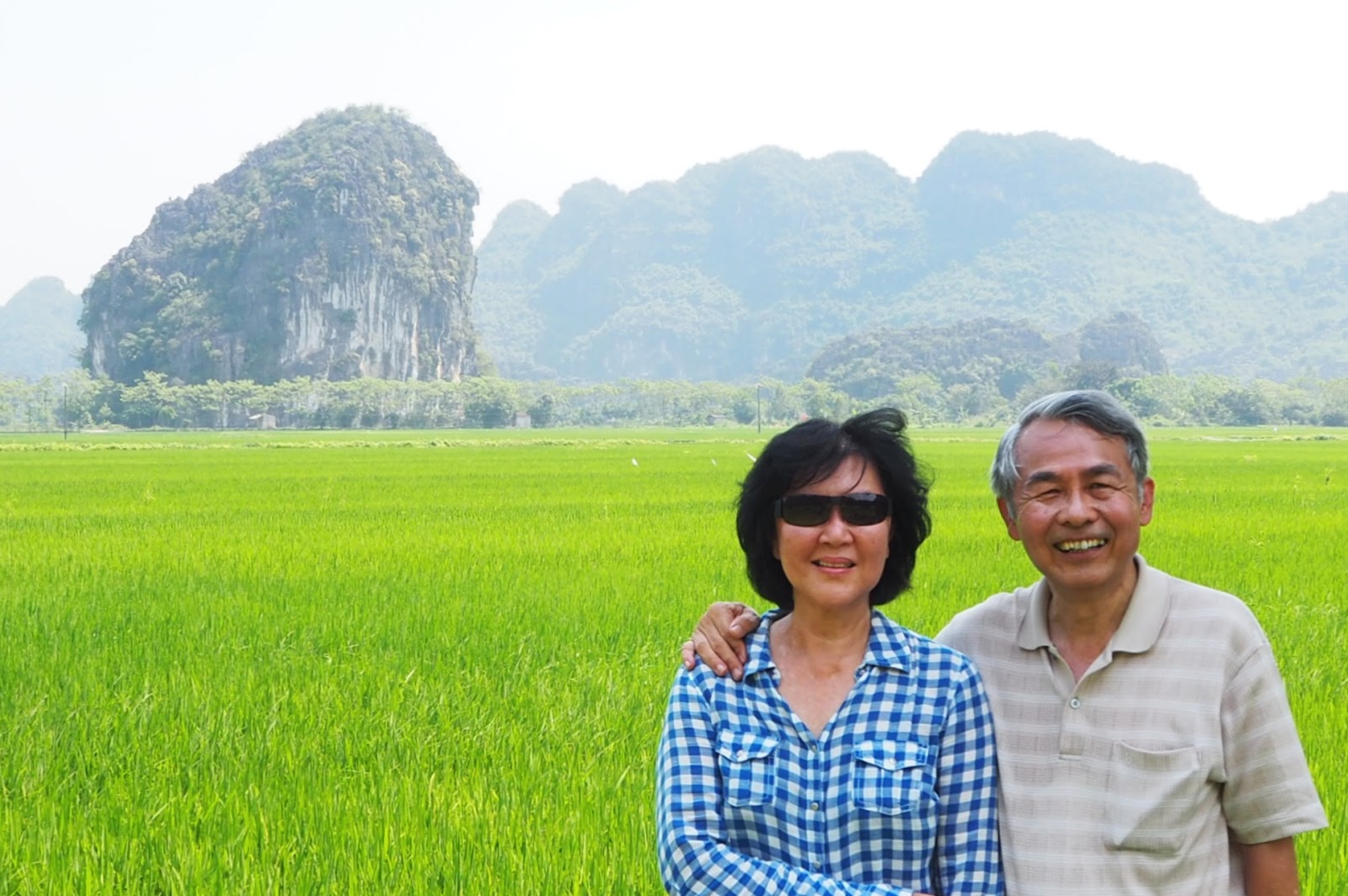
When the Hotel E-Commerce Manager proposed in the itinerary to spend a day in Hoa Lu Tam Coc, I had no idea what this place had to offer. But the many photos I googled were indeed impressive and picturesque. I was looking forward to the experience in Tam Coc.
Picturesque Tam Coc as shown in many photos I googled.
******************************************************
Tam Coc in the District of Ninh Binh is a mere 100 Km south of Hanoi. Still, it took the coach two and half hours to reach the destination. The one-day tour to Hoa Lu Tam Coc began with a visit to the first university of Vietnam in Hoa Lu. Hoa Lu used to be the ancient capital of old Vietnam under the Dinh and Le Dynasty. The education system and governing civil system adopted then to screen and select intellectuals and bureaucrats was very similar to the system started by Confucius. The architecture of the campus buildings reminded us of the once close historical link between China and Vietnam.
Hoa Lu.
One of the university buildings in the campus.
This Temple of Literature is used on the reverse of the VND 100,000 bill.
*******************************************************
The excursion to Tam Coc commenced with a 45-minute cycling tour around padi fields through village track and pathway. We put into good use our recently re-learnt skill in cycling.
Much to my disappointment, the panoramic view and grandeur of the so-called Inland Ha Long Bay of Vietnam could not be fully experienced when we were only rowing the boat at ground zero level. The uniqueness of this landscape would have been better appreciated if a strategic high point can be provided to facilitate a panoramic view of this unique landscape.

We were warned in advance of the nuisance of persistent pestering by "cameramen". They do unsolicited photo shoot and later pester the tourists to buy their photos. The boatmen hired to ferry the tourists too demand for tips and cola money from the visitors. Notwithstanding our preparedness, their persistence was still a pain in the ass of an otherwise enjoyable trip!
Photo bought from persistent camera lady.
Padi field viewed at ground zero level.
Farmers at work.
Some similarities to Kuilin, China.
Entrance to one of the three caves. 

Wednesday, April 26, 2017

Ha Long Bay, Vietnam

Any first timer to Hanoi would most likely choose to make a trip to Ha Long Bay. It can be a day trip, a 2D1N or even a 3D2N tour. We opted for a 2D1N cruise experience.

Ha Long Bay, a UNESCO World Heritage Site is famous for its almost 2,000 limestone karsts and isles in various shapes and sizes dotting across the bay covering more than 300 Km2. Spending a night in the cruise allows one to experience its surrounding and ambiance at different times of a day.
Lighted cruise ships at night.
Misty Morning.
To have a panoramic view of the bay, it is best to climb the 427 steps to reach the peak of the 100m high Ti Top Island. Ti Top Island is named by President Ho Chi Minh, after the first visit of the Russian astronaut, German Titop to Ha Long Bay in 1962.
Ti Top Island in Misty Morning.
Limestone karsts and isles viewed from the top of Ti Top Island. 
Panoramic View of Cruise ships anchored near Ti Top Island.
 
Ti Top Island is also recognized to contain the best beach
among all island in Ha Long Bay.
*******************************************************
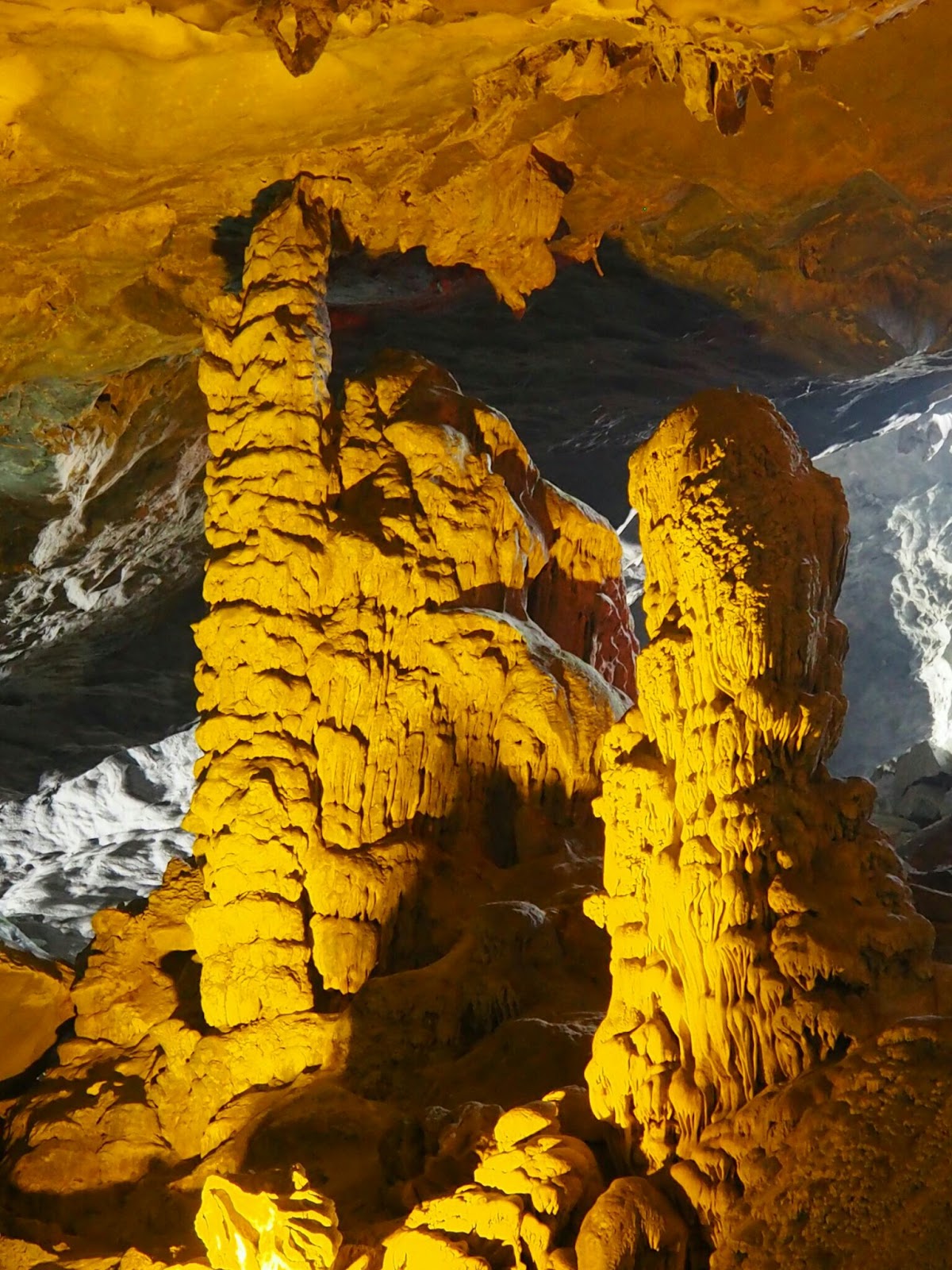
A tour of Thien Cung Cave (Translated as Heavenly Palace Cave in Chinese) is part of the itinerary of a 2D1N cruise. This cave which is 10,000m2 in size is nothing in comparison with the Muru Cave System near Miri Sarawak we visited in February early this year. Still, every cave is unique and different. With technology and creativity, the uniqueness and characteristics of a cave is enhanced with colorful lighting effects and illumination. This is no exception with Thien Cung Cave.
Panoramic view of the jetty from cave entrance.

Tuesday, April 25, 2017

Unusual Building Code

Anyone who is familiar with building design would very quickly notice the uniqueness of Hanoi buildings. Each unit is super narrow in the front but is usually long lengthwise. Structural engineers would find it very challenging to design tall thin and slender buildings that cater for seismic forces. Moreover, area in the mid section of such long and narrow building without side windows is expected to pose ventilation and lighting problems.

As I discovered later, such practice dates back many years ago. Taxes were calculated based on the width of the building. In areas ruled by the French then, taxes were also calculated based on the window area. This explains why there are so few front windows and practically no side windows. This is indeed a very unusual building code!

Monday, April 24, 2017

Day 1 in Hanoi

Earlier in March, we contacted by email a hotel in the city centre of Hanoi to request for a proposed itinerary for a 5D4N stay in Hanoi. We made it clear that it must include a 2D1N cruise in Halong Bay.

By the time we checked into the hotel after we landed at Hanoi Airport, it was early afternoon and we had the rest of the day for ourselves. We started by exploring this "chaotic" city. The word “chaotic” is most apt to describe the traffic system of this city. For somebody who comes from a place with proper traffic system, Hanoi's traffic system is almost insane! While there is some minimum traffic system in place, it is never followed either by drivers or the pedestrians. If one wants to cross the road either via the Zebra Crossing or to wait for the traffic light to turn green for the pedestrian crossing, one would never ever be able to cross to the other side.  The fact is that drivers will never ever stop for you! You just simply have to walk right through the road confronting directly the speeding cars and motorbikes. The amazing thing is that these incoming vehicles and endless waves of motorbikes somehow know how to slow or stop at the nick of time just inches away from you to allow you to pass through without a scratch. In spite of the apparent chaotic system, it has in fact a "system". I am very certain if some traffic wise guys want to introduce a regulated traffic system, the city traffic will most likely descend into a paralysis. We were green horns in crossing the road when we first arrived to Hanoi. But by the end of the holiday, we have become confident seasoned pedestrians just like the locals!
******************************************************
In the late afternoon, we spent 45 minutes watching the Water Puppet Show at the Thong Long Puppet Theatre which is just 5-minute walk from our hotel. The show is so popular that it runs at every 70 minutes interval from morning till night!
*******************************************************
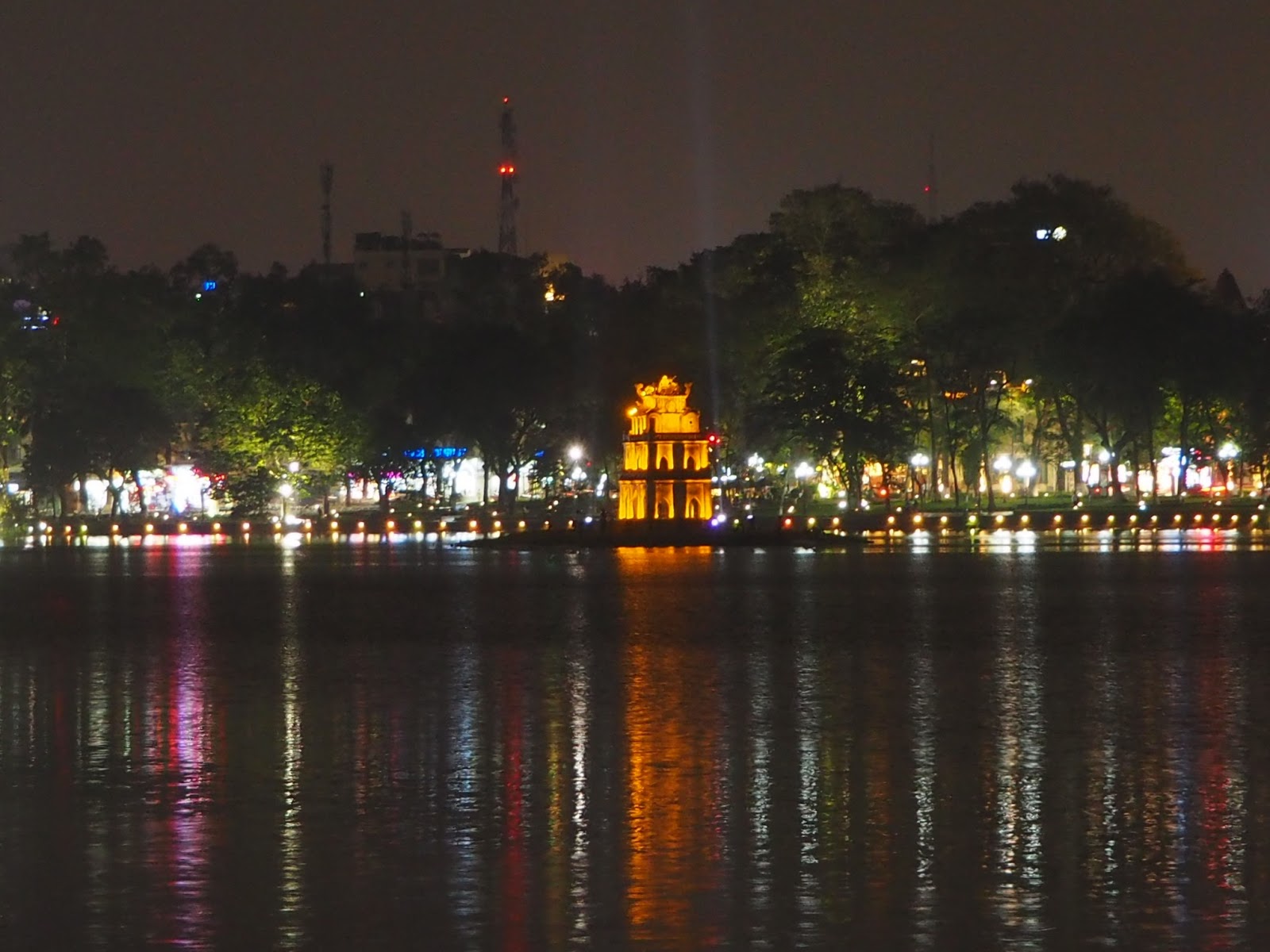
Hoan Kiem Lake which is a mere 3 minutes walk from our hotel is also a popular site for both locals and tourists. During the day time, the lake looks rather unpleasant with murky water and floating rubbish. But at night, it is deceptively beautiful when the surrounding trail, buildings and pedestrian bridge are lighted up!.

Monday, February 27, 2017

Mulu National Park Sarawak - Penan & Rainforests

On the way to the Wind Cave, the boat stopped by a riverbank for visitors to visit a Penan settlement. I was quite excited and looked forward to see the Penan longhouses. 

Penan was unknown to the world before early 1980's. This little tribe in Sarawak was brought to world attention by Bruno Manser, a Swiss environmental activist back in the mid-1980's. He stayed with the Penan and organised several blockages against timber companies. After he emerged from the rainforests in 1990, he was involved in activities related to the preservation of rainforests and human rights of indigenous people especially the Penan. He later founded the Bruno Manser Fund in 1991 which is active even to these days. Unfortunately, he disappeared during his last journey to Sarawak in May 2000 and was never found. He is presumed dead.

Quite to our disappointment, we did not find any traditional longhouse but instead we saw "modernized" version made of reinforced concrete structure and brickwalls. The State Government has since the era of Bruno Manser started program to relocate Penan who used to live a nomadic life to permanent settlement. This has allowed the Penan to enjoy better public, education and health amenity. The Penan here are given the option of pursuing new survival skill by engaging in the making and sale of handicrafts or to roam the forest nearby and hunt for whatever little wildlife that they can find. I think the government should not be faulted for their effort in elevating the quality of the life of this indigenous people. At every stage of human struggle for better life throughout history, certain thing unfortunately is lost whether by choice or circumstances because of the change of environment.
Modern Penan Longhouse.
Stores selling handicrafts and souvenirs.
This man sells three blowpipe darts for one buck.
The Mulu National Park itself also organizes many activities to cater for a variety of visitors (Read here) such as trekking, adventure caving. But the more popular ones are the Canopy Walk and the Night Walk. We decided against doing the Canopy Walk which was scheduled in the afternoon because of the intense sunlight that we may have to expose ourselves to. Instead we decided to take a botany walk around the park's nearby trail.
Massive trees which are accessible within 10 minutes walk 
from the Park Office.
Hammerhead worm, cricket and grasshopper seen along the trail.
Millipede, butterfly larva and lizard.
Floral seen along the trail.

Sunday, February 26, 2017

Mulu National Park, Sarawak - Clearwater Cave

The tour itinerary ended with a visit to the 4th and final cave, the Clearwater Cave. We reached this cave after 10-minute boat ride from the jetty at the Wind Cave.

To some, particularly the senior citizens, access to this cave would be most challenging because of the need to climb more than 200+ steps built along the forested hill slope before reaching the cave entrance.
A tea break was scheduled at the jetty
cum resting platform 
before the assault
to the Clearwater Cave.
Climbing the staircase.
The Clearwater Cave System is reckoned to be the longest inter-connected cave by volume in the world. According to our tour guide, the length of the cave route that has been surveyed is now 250 Km.
Ceiling opening caused by sinkhole.
Plants inside the cave tilts towards the cave 
entrance to gain maximum exposure to 
the sunlight!
****************************************************
This unusual feature found on the rock surface is formed with the initial growth of a certain kind of algae that feed on its surface. Soon when the rock surface is subjected to water current, the invaded parts are washed off leaving these multitudes of jagged surface!
A bottomless pit.
***************************************************
The subterranean river is said to carry around 20 tonnes of dissolved limestone out of the cave every year!
Subterranean river inside the cave.
The whole group - with the Chew's
family from West Malaysia
.
The tour concluded with lunch at the jetty area. Some would not leave until they have gone for a dip in the cold water in the river!

After my visit to the Gunung Mulu National Park, a UNESCO World Heritage Site since year 2000, I have no hesitation to recommend it to individuals who are interested to explore nature, cave systems, floral and fauna.