Monday, February 13, 2017

Never Say Die!

It's CNY season, my wife, being a good daughter made it a point to visit her mother in BP. She took a short break from her role as "confinement lady" for her new granddaughter, Olivia to make this trip which lasted a mere 48-hour duration. Still, we achieved much. We visited the matriarch, had a session of card game with my grandnephew & grandniece and attended a reunion lunch with a group of ex-convent girls.

The bus ride from Singapore to Batu Pahat on 29 January 2017 would have been smooth and fast if not because of the delay caused by the long queue of Chinese tourists waiting for clearance at the Malaysian Custom. We had to sit in the bus for an hour even though we were cleared within minutes at the counters reserved for Malaysians. The Singaporeans in our bus unfortunately had to queue with the Chinese tourists.

After that incident, the otherwise uneventful bus ride was somewhat spiced up by the live update of the epic clash of tennis giants, Roger Federer and Rafael Nadal in the Australian Grand Final. I was sure that Nadal would clinch the title when he was leading 3-1 in the final 5th set. Then all of a sudden, good fortune was on Federer's side. He was then unstoppable and won the next five games to win 6-3. I dropped my jaw at the turn of event.

At age 35 and without winning a title since 2012, Federer's latest win proves he is truly the greatest among all tennis legends. His tenacity and "Never Say Die" spirit is indeed admirable!
The victor and the second best!
*******************************************************
At the CHIJ (Convent of Holy Infant Jesus) Batu Pahat reunion, the ladies were adamant that the odd man be invited to join their reunion lunch. My role was to be their photographer!
*******************************************************
The card game started with a loan of two bucks from my grandniece. In the end, I was back to zero. No gain no loss!

Saturday, February 11, 2017

Passing the Baton Through Generations

As soon as I arrived at Sam and Rachel’s place from Changi Airport on 25.01.2017, I was immediately offered the privilege of holding my third grandchild for the very first time. She was exactly three weeks old that day - a tiny, precious bundle of life. It was an indescribable feeling to cuddle this little baby girl, the firstborn of Sam and Rachel.

Olivia, as she is named, was incredibly adorable - soft, warm, and so cuddle-friendly. As I held her close, many thoughts filled my mind. I paused for a moment and remembered that on this very same date, eleven years earlier, my father had passed away. The bittersweet symmetry of life and death struck me deeply. I couldn’t help but think how joyful he would have been to know that yet another great-grandchild had been born - a continuation of the family line.

There was a deep sense of satisfaction and quiet fulfillment within me, knowing that the "baton of life" passed on to me by my parents is now being handed over to the next generation - and now, even to a fourth. The Chinese characters 傳承 (chuan cheng), meaning passing on or inheritance, came to mind. These two words capture a concept that has long motivated the Chinese around the world to hold fast to their heritage, traditions, and identity across generations.

During the rest of my stay, I spent long, cherished moments cradling and cuddling baby Olivia - soaking in the quiet joy only a grandparent can truly understand.

As Donald A. Norberg once said,
"Surely, two of the most satisfying experiences in life must be those of being a grandchild or a grandparent."

Full Month Celebration.

Friday, February 10, 2017

Back to Home Town

As grandparents, watching kids grow and interacting with them is fascinating and rejuvenating. I last saw my granddaughter, Gracie some six months ago in July 2016. Since then, she has improved so much in language skill and dexterity. When she last visited KK in July 2015 (Read here) some one and half years ago, she tripped once when she rushed over the split-level drop between the Dining area and the Living hall of my house without realizing the drop. This time, I observed she sped across the same drop with ease and confidence without a moment of hesitation!

Away from hectic daily routine, my daughter and her family spent just over a week of leisure and relaxation in KK in January just before CNY. As expected, much of the time was spent in savoring some of our "Must-Eat" KK food.

Our only out-of-town excursion was a day trip to Desa Dairy Farm in Kundasang, Ranau. That was my first trip to area close to Mt.Kinabalu since the earthquake in June 2015.

As for Nathan, his stoutness is slowly ebbing, making way to becoming a taller and slenderer boy. This time, he needs much more urging to get into proper poise for photography! On another note, his readiness to help in chores like dish washing is indicative of his maturing to another level. His love for and knowledge about Lego and Transformers is phenomenal. One morning, I was surprised when he asked me to switch on the PC because he needed to "google" some information about Transformers. There is no doubt that he belongs to a new generation who would thrive in cyberspace!
At Nabalu with Mt. Kinabalu in the background hidden in thick cloud.
At Desa Dairy Farm.
Eating exclusively all for herself a whole cup of ice cream in
Desa Dairy Farm.
Gift of mini umbrella (Left)  and
a dip in the pool of Kinabalu Golf Club (Right).
At Uncle Gerry Recipe (Left) and Taliban Food Centre (Right).
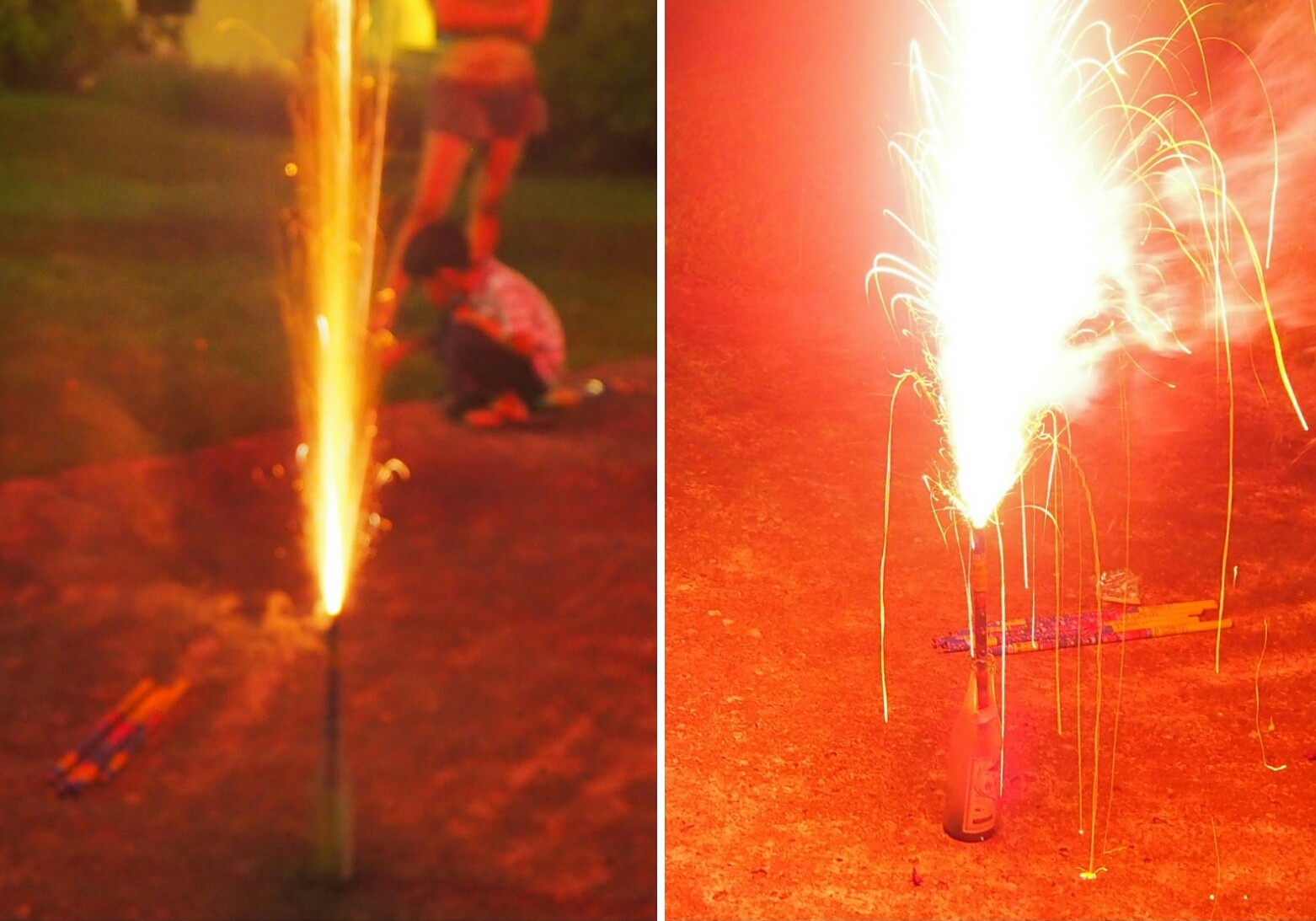
Pre-CNY firework.
Pop Pop firecracker.

Thursday, January 12, 2017

Chapter 25: Remembering My High School Chemistry Teacher - Chuah Eng Wah

Recently, I received a parcel from North Carolina, USA, sent by my former high school Math teacher, Edward Greenawald. Inside was a treasure - a large collection of black-and-white photographs taken during the 1960s, when he was teaching at Lok Yuk English Secondary School in Jesselton. Now in his seventies and still single, Edward probably decided to entrust me with the entire collection for safekeeping.

Among the photographs, one snapshot caught my eye. It was taken in the staff room, most likely around 1966, and in it I recognized my former Chemistry teacher, Mr. Chuah Eng Wah, who sadly passed away late last year.

News of his passing came as a surprise, though not entirely unexpected. I had last met him less than two years earlier, and at the time he appeared fit and healthy. It was only when I paid my final respects to his remains on 29.11.2016 at the funeral parlor that I learned of his long battle with prostate cancer, which had been diagnosed some five years earlier.

Back in our school days, he was always fondly addressed as “Mr. Chuah,” a title we continued to use even in later years, as we regarded him as our teacher for life. Mr. Chuah was not considered an outstanding teacher in the conventional sense. Having graduated from Taiwan, he spoke English with a distinct accent typical of Taiwanese-educated graduates. One of his most memorable classroom expressions was the phrase “Yes Not” - his way of seeking confirmation from students, a literal translation of the Chinese phrase "是不是?" While his English proficiency may not have been strong, he more than made up for it with his dedication, hard work, and kindness toward his students.

Teaching Staff of Lok Yuk Secondary School Likas 1966.
3rd from right is Chuah Eng Wah
Another photo taken at the staff room in 1966. Mr. Chuah is second
from right. Mr. Lo Vun Nyen at right was my Chinese teacher.
Mr. Tsen, 3rd from right was my Health Science teacher.
Teaching Staff of Lok Yuk Secondary School Likas 1969.
Back row 4th from right is Chuah Eng Wah
With eldest daughter of Chuah Eng Wah, Chuah Yuan San
taken on 29 Nov 2016 at the funeral parlour.
He was both my Form Teacher and Chemistry Teacher in Form 4 in 1968. I still have in my possession the Form 4 Report Card with the marks of the numerous subjects personally entered by him. Other than Chemistry, I was not considered good at most of the other subjects. I barely scrapped through my English and failed once in my Physics. But by God's grace, I passed my A Level and graduated later on as a Civil Engineer. In a way, the subject of Chemistry did have a bearing on my choice in pursuing an engineering degree eventually.

Saturday, December 03, 2016

Fidel Castro (1926 - 2016)

Before 25 November 2016, Fidel Castro was probably the very last man on earth who rose to become a national leader through hard fought revolution. He belonged to a breed of politicians or more appropriately revolutionaries who through sheer personal conviction and skillful mobilization of the masses to change the history and destiny of Cuba. People of the likes, Stalin, Mao Zedong, Ho Chi Minh and even Nelson Mandela are all gone. The very last of such breed would likely be Xanana Gusmao of East Timor.

Almost all revolutionaries are controversial people and Fidel Castro was no exception. They are both loved and equally hated. It all depends on which side you belong. The bourgeoisie, many of whom were stripped of their wealth and power left Cuba for Miami in US celebrated his death. But the working class majority who were liberated and given the opportunity to share the nation's wealth wept for his passing.
Fidel Castro was an avowed adversary of US which to him is the embodiment of ultimate capitalism. He once said, "I find capitalism repugnant. It is filthy, it is gross, it is alienating, because it causes war, hypocrisy and competition". He claimed to have survived 634 assassination attempts and plots on his life, mainly from CIA and US-based Cuban exiles. He stayed in power for 49 years from 1959 until he ceded power to his brother Raul in 2008. He outlasted nine US presidents starting from Dwight Eisenhower to George W Bush.

He had hoped that the capitalist system in US would disappear one day but that did not happen in his life time. Instead he saw the virtual demise of communism in Soviet Union and Communist China. In the end he had to let his brother do the mending of tie with the US and he did live to see the re-establishment of diplomatic relation between his country and foe, the US.

Will there be another Castro is the future, probably not. Gone were the days when men were driven by political ideology to become revolutionaries. Today, we see many "war lords" fighting for economic gains and vengeful sectarian pursuits rather than grand scheme that aim to liberate the oppressed, the marginalized or the disadvantaged. The term, "a parliament of baboons" aptly describes the kind of politicians we have today!

Fidel Castro will be remembered as the little "David" who dared to stand up against the mighty neighbor "Goliah", the United State of America and survived. History will remember him both as a hero just as much as a villain!

Sunday, November 27, 2016

A Stand for the Better

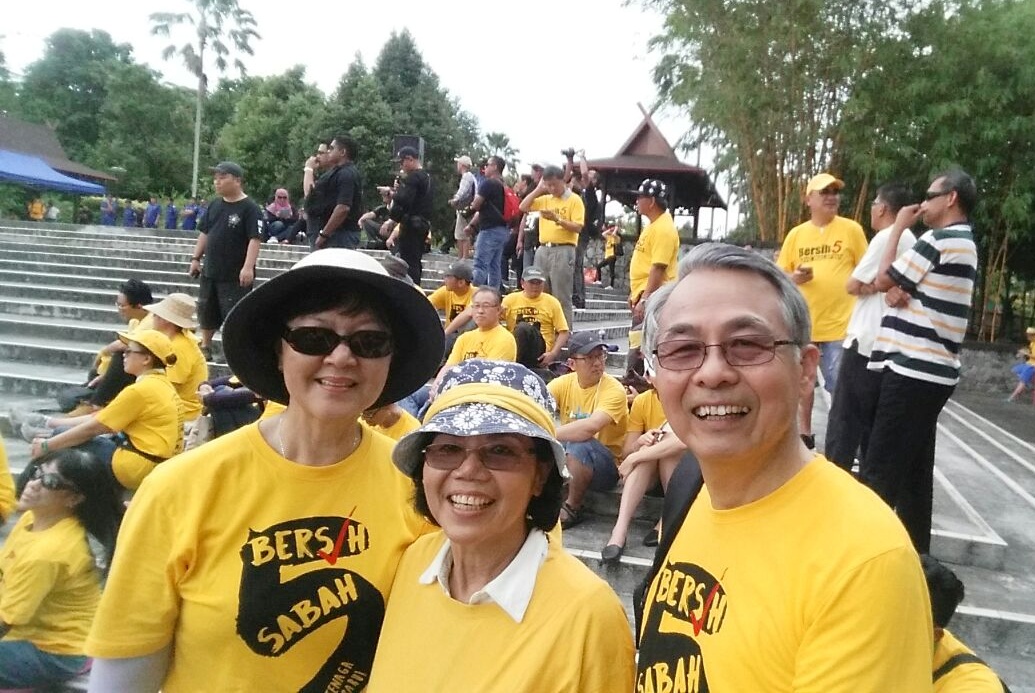
For the fifth time, on 17 November 2016, Malaysians dressed in YELLOW took to the streets of major cities across the nation to make a public stand on issues crucial to the health of the country and the well-being of future generations. Bersih 5 was a peaceful, democratic protest that called for Free and Fair Elections, the Right to Dissent, the Strengthening of Parliamentary Democracy, and the Empowerment of Sabah and Sarawak, among other demands for reform.

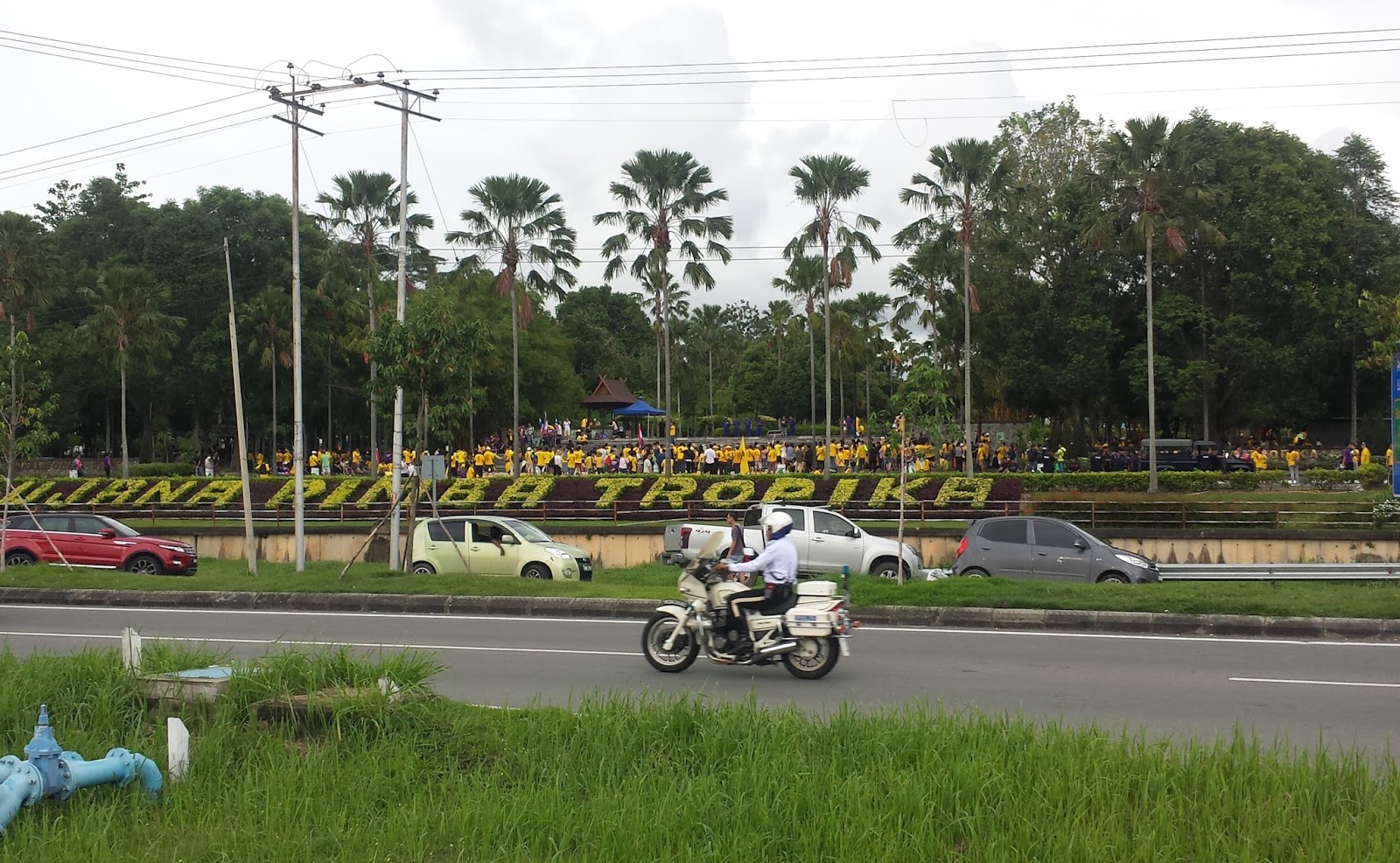
In Kota Kinabalu, at Ujana Rimba Tropika, we saw a heartening mix of familiar faces and new ones - people from different walks of life united by a shared concern for the nation’s direction.

The silence of many, however, was understandable. Some believed that protests would change nothing. Others were constrained by circumstances - civil servants, employees of government-linked companies (GLCs), or individuals bound by contracts with the government. Their absence was often not due to apathy, but to personal or professional risk.

What was most disappointing, though, was seeing individuals who had been very vocal in private - particularly in closed chat groups - now retreat into silence. These were the same people who frequently quoted powerful lines like “The only thing necessary for the triumph of evil is for good men to do nothing.” And yet, when the moment came to stand in solidarity, in broad daylight, and speak truth to power alongside others at Bersih 5, they were nowhere to be seen.

In such moments, the stark contrast is painfully clear: some are courageous enough to walk the talk, while others remain armchair warriors at best, or worse, grand performers who thrive on rhetoric but shy away from action.

With Gina in the middle, wife of Vincent Gadalon.
With Lam Kee Hing.
Top photo: With Joseph Wong (left) and
Chua Tok Sing (middle).
Bottom left photo: With Peter Tsen.

Tuesday, November 15, 2016

Sourcing Water for Portable Water Supply Schemes

Searching for suitable water sources for portable water supply schemes often takes us deep into forested catchment areas. These treks are not always easy - steep terrain, dense vegetation, and unpredictable weather can make the journey physically demanding and logistically challenging. Yet, every so often, the hard work pays off, not just in terms of technical findings, but also in the breathtaking views and untouched natural beauty we encounter along the way.

Our most recent excursion brought us to Kiulu, where we set out to assess a small river upstream of the Tuaran River as a potential intake site. Although we attempted to access the area via an alternative route, the effort proved unsuccessful due to difficult terrain and unclear trails. Nonetheless, the journey was far from disappointing. The scenery along the way was simply spectacular - rolling hills, cascading waters, and panoramic views that made the entire trip worthwhile.

However, tapping into rivers in this part of Sabah comes with its own set of challenges. The river system in Kiulu is well-known for two things: white water rafting and the Tagal System. The Tagal System is a traditional community-based river management practice whereby fishing is strictly prohibited in designated zones, except during specific times of the year. These zones are managed by individual villages or kampung, with each section of the river falling under the stewardship of local communities. Fishing is typically permitted during the dry season, usually between February and April (Read here).

This sustainable system ensures the preservation of fish populations and river health, but it also means that any water extraction efforts must take into account the social and ecological frameworks in place. As such, any plans to draw water from the Kiulu river system will require close collaboration with local stakeholders and careful consideration of both environmental and cultural factors.


*******************************************************
While in Kiulu, I took the opportunity to visit my maternal uncle, Wesley Dungko Pai, whose house is nestled right beside the Tuaran River. It was a meaningful stop, as I hadn’t seen him since my last visit in February 2013 (Read here).

I was fortunate to catch him at home - just in time before he was due to leave for Kota Kinabalu to attend a birthday celebration organized by his children later that evening. Coincidentally, it was his birthday that very day - 9 November 2016 - and he had just turned 79.

Uncle Wesley has always been supportive and open-minded when it comes to community development. He expressed a receptive attitude toward the idea of the government abstracting water from the river system for a public water supply scheme. His perspective, grounded in both local knowledge and community experience, adds valuable insight as we consider the viability and acceptance of such projects in the area.

Monday, October 31, 2016

The Red Panda in Chengdu

The Panda, China’s national animal, is arguably one of the most lovable and iconic creatures in the world. Our itinerary in Chengdu included a visit to the Chengdu Research Base of Giant Panda Breeding, a renowned center dedicated to the conservation of this endangered species. While we did manage to catch a glimpse of the pandas, it wasn’t without a bit of a struggle - maneuvering through the dense crowd of visitors that packed the center that day was no easy feat.

This wasn’t my first encounter with a panda. I had the rare opportunity not just to see, but actually to "cuddle" a panda during a visit to the Chongqing Zoo back in 1993, as part of a tour organized by the Institution of Engineers Malaysia. That experience remains a cherished memory.

This time, I was pleasantly surprised to learn about another lesser-known species - the Red Panda. Unlike the iconic black-and-white Giant Panda we all know, the Red Panda resembles a raccoon and is much smaller in size. In Chinese, the two animals are referred to as the "Big Panda" and the "Small Panda," but beyond the name and their shared love for bamboo, they are entirely different species. Interestingly, the Red Panda is known to be more aggressive than its more docile counterpart, which explains why cuddling a Red Panda is certainly not on the list of things to do at the Research Base!

I don’t recall paying a hefty fee to hold a panda back in 1993, but times have changed. At the Chengdu Research Base, cuddling a panda now comes with a steep price tag of RMB 2,000. However, I can fully understand the reasoning behind such a high cost. Any lower fee would likely attract overwhelming crowds, placing immense stress on the animals and potentially endangering their health.

What impressed me most was the level of care and commitment shown by the Chinese authorities in their efforts to protect this precious species. The RMB 2,000 “donation” isn’t just a fee - it’s a meaningful contribution to the conservation and well-being of the Giant Panda. For true panda lovers, it’s a small price to pay to support the survival of one of the world’s most beloved animals.

Red Panda.
A tourist after paying RMB2,000 and donning full gear of sanitary protective clothing, cap and surgical mask would have the luxury of watching and examining the Panda at close range.
*******************************************************
I can't recall paying any major fee to cuddle a Panda in Chongqing Zoo in 1993. That was 23 years ago! 

Friday, October 28, 2016

Alma Mater

Some say the term Alma Mater does not apply to the primary school one attended. They contend that it is a designation typically reserved for one's university or college. I hold a slightly different view. To me, the impact of a person’s first school is deeply significant. From this perspective, I see no issue in referring to Lok Yuk Primary School Jesselton - now renamed Sekolah Jenis Kebangsaan (Cina) Lok Yuk, Kota Kinabalu - as my Alma Mater.

I spent six formative years there, from 1958 to 1963. More than five decades have passed since, and yet I can still vividly recall all my teachers and most of the incidents, both happy and sad, that shaped those early years. It's fascinating how that part of the brain remains so intact - unlike the part that deals with recent events. These days, names and faces from recent encounters tend to fade too quickly!

I can’t quite remember when I last attended an official school event - it must have been a very long time ago. However, I did visit the school many times over the last twenty years, in a professional capacity. I served as the consulting engineer for the construction of two of the three school blocks. When the School Management Board organized the official opening ceremony for the latest addition - a new canteen and multi-purpose block - I was invited, but unfortunately, I couldn’t attend. Ironically, I no longer remember the reason why.

Earlier this year, a new school management board took over, and their first initiative was to widen the main entrance access road. This time, I was able to attend the groundbreaking ceremony, officiated by the Bishop of the Basel Christian Church Malaysia.

The ceremony was scheduled for 8:00 a.m. on 18.10.2016. I arrived early and was invited to sit in the school canteen with other dignitaries and board members who had also arrived ahead of time. I recognized almost everyone there, except for a young lady seated in front of me. Her face struck a familiar chord, but I quickly gave up trying to place her. A moment later, the Senior Pastor of BCCM KK (C), seated beside me, identified her as the Chairperson of the school’s Parent-Teacher Association.

Almost immediately, she turned to me and asked, “Did you stay in Taman Foh Sang before?” That question lit up a long-dormant memory. I instantly recalled the Shim family, who lived directly opposite my government-rented semi-detached house during my time with JKR. Before she could finish saying her own name - “Ger…” - I completed it for her: “Geraldine.”

It was 1983 - 33 years ago - when Geraldine and her younger brother came to my house for Serene and Sam’s joint birthday party. She was probably around eight or nine then.

That moment reminded me of something profound: children remember faces far better than we assume. We had a long, warm chat, catching up on more than three decades. Geraldine shared that her eldest child is now in Form 1 at Tshung Tshin, and her second is in Primary 2 at Lok Yuk - hence her involvement in the PTA. She admitted some insecurity over her limited proficiency in Mandarin, having studied in BM/English-medium schools, but I assured her that she would do just fine in her role.

I left the event with a heart full of gratitude - not just for the school's continuing efforts to grow and improve, but also for the realization that people grow, evolve, and become your peers, sometimes even your superiors. It was a timely reminder: never overlook or dismiss anyone, no matter how small or seemingly insignificant they may appear. You never know - someday, somewhere - that person may turn out to be your peer, your leader, or perhaps even your lucky star.

Group photo after the ceremony.
December 1983 in Taman Foh Sang. 
Standing at back row middle is Geraldine.

Sunday, October 23, 2016

Kelantan, a Paradox

These days, besides 1MDB, the other most talked about word is probably Hudud. Whenever we hear or read about Hudud, we think of Kelantan. This is because Kelantan or PAS has been relentless in pursuing the implementation of Hudud. To be more precise, it is PAS' Hadi Awang of Kelantan who is obsessed about this rather than Kelantanese perse.

Before 11 October 2016, I could not say much about Kelantan because I have never been there before that. But after spending almost three days in Kelantan, I do have a better idea of this so-called Islamic heart land of Malaysia.

Other than the constant blaring of Azam prayers every now and then and the predominant Muslim population, there is little difference between Kota Bharu and any other West Malaysian towns. Occasionally, one can see a few women donning the niqab. Yet, they are the minority rather than the majority. In Kota Bharu, women appear to be in the forefront dominating most business premises, outlets and counters. Most stores in Siti Khadijah Market are manned by women as I observed.

After crisscrossing Kelantan, it appears to me that Kelantan is more culturally and religiously diverse than what it has been portrayed.

Thai or Siamese influence is particularly strong in the northern part of Kelantan. In some locations, one may feel like visiting Thailand or part of China rather than an Islamic state.

In Rantau Panjang, a town close to Thai border, the local mosque design looks more like a Chinese museum rather than the traditional Arab dome-shaped roof structure that we are used to.

Food wise, one can savor typical Kelantanese food, Thai and Chinese food. There is no shortage of Chinese food if one knows where to look for them. We particularly enjoyed Khau Jam which is the equivalence of Nasi Kerabu but of Thai origin. The rice is cooked in a variety of herbs and leaves and is served with the same accompaniments and topped with chilli paste and fish crackers, a must for all Kelantanese dishes.

According to local Chinese I talked to, pork is openly sold in public markets and in full view of the Muslim!

After seeing Kelantan first hand, the question remains. What is the real agenda for Hudud?
 
A building complex  in Rantau Panjang 
which is a mosque looks more like a Chinese 
temple than the traditional mosque
design that we are used to.
Siti Khatijah Market.
Khau Jam of Kedai Kopi dan
Makanan U-Lang Corner
.
Chicken grilled by coconut husks fire
and Tong Fen Prawn
Temple of Siamese design in Kelantan.