Sunday, July 23, 2017

Inner Mongolia

We hadn’t actually planned to take another tour to China this year. One major deterrent was the near inevitability of being taken to so-called “slaughterhouses” - shopping outlets disguised as tourist stops, where group tour participants are subjected to relentless and often manipulative sales tactics. The goal, of course, is to pressure tourists into parting with their money. The mere thought of enduring these unpleasant experiences again was enough to extinguish any enthusiasm for signing up for another China tour.

But when the idea of visiting Inner Mongolia was brought up, something stirred. The prospect of exploring the exotic and enchanting Mongolian grasslands rekindled our interest. For someone like me, who grew up humming the nostalgic tune “Night on the Prairie,” the romantic allure of the open steppe was simply too irresistible. And so, we decided to give China one more chance.

The tour began with a red-eye flight on Air China, departing Singapore for Beijing at 00:15 on 25 June 2017 - not exactly the most appealing time to start a journey. The flight to Beijing took just over 5.5 hours, followed by another 2-hour domestic flight to Harbin. After a short lunch break, we boarded a high-speed train at Harbin Railway Station, bound for Qiqihar.

Boarding the train was pure chaos. As soon as the gates opened, passengers surged forward in long, jostling lines. Within moments, we lost sight of our tour group in the crush of bodies. Disoriented and unsure of where to go, we turned to the railway staff for help - but to no avail. Fortunately, a few kind strangers came to our rescue and pointed us in the right direction. We made it to the platform with just 30 seconds to spare before the train arrived. I shudder to think what would have happened if we’d missed it.

Despite the shaky start, the journey offered one unexpected benefit: it taught us more about the geography of northern and northwestern China. For years, I’d often confused Inner Mongolia with the country of Mongolia - and I suspect I’m not alone. Inner Mongolia is, in fact, an autonomous region within China, whereas Mongolia is a separate nation that lies to the northwest. The northern frontier of Inner Mongolia even shares a border with Russia, adding to the region’s unique geopolitical and cultural character.

The highlight of our tour was supposed to be the famed Mongolian Grassland in Hulunbuir - a sweeping, romantic landscape that had long captured our imagination. However, what we encountered fell far short of expectations. Far from the vast, untamed prairie depicted in the promotional material, we were brought instead to a manufactured settlement conveniently located just off the highway, clearly designed to cater to passing tourists.

A handful of yurts had been erected within a fenced compound, but the one we were shown wasn’t even a traditional dwelling - it had been repurposed as a small canteen for serving tourists. Inside, it was completely bare except for a few tables and stools, lacking any cultural or historical ambiance. Outside, several horses were tethered for tourist rides, and a go-kart ring had been set up in the open field, presumably to satisfy thrill-seekers. The entire setup felt more like a mini adventure park than the authentic Mongolian grassland experience we had envisioned.

Naturally, most members of our tour group were disappointed. Many of us had hoped to witness a genuine Mongolian pastoral scene - herds of sheep and horses grazing freely, yurts dotting the open plains, and nomadic families living in harmony with nature. Instead, we were left wondering whether this letdown was the doing of the Malaysian tour company or their Chinese counterparts. Somewhere along the line, something had clearly been lost in translation - or sacrificed for convenience.

Still, I tried to remain positive. If nothing else, I let my imagination fill in the gaps, painting in the rolling plains and wandering herds that we didn’t get to see. Sometimes, the mind can conjure what reality fails to deliver.
Mongolian costume offered to tourists
for photo taking. 
**************************************************
In the end, it was the scenic drive - winding alongside vast expanses of open grassland and an endless panorama of rolling green hills - that helped redeem the underwhelming experience at the so-called Mongolian Grassland. The breathtaking natural beauty of the landscape, untouched and limitless, offered a quiet consolation and reminded us of the wild, untamed charm we had hoped to find.

Sunday, June 11, 2017

Passing of A Sabah Cultural Icon - Tina Rimmer

The New Straits Times on 10.06.2017 reported that the late Tina Rimmer was posthumously awarded the Sabah Cultural Icon Certificate by the Sabah Minister of Tourism, Culture and Environment, Datuk Masidi Manjun. Tina Rimmer passed away on 31.05.2017, just two months short of her 100th birthday (Read here).

In the 1990s, Tina lived in a corner house at Taman Orchid, beside the BCCM Kota Kinabalu church compound at Dah Yeh Villa. During this period, she attended the Sunday English Worship Service at BCCM KK and was a regular participant in our weekly home fellowship group.

The fellowship group celebrated her birthday after a usual gathering on 9 August 1997.

Born Mary Christina Lewin, Tina Rimmer was an English-born teacher and artist who became one of Sabah’s most beloved cultural figures. She arrived in British North Borneo (Sabah) in 1949 as an education officer, training teachers and later teaching in both rural and urban schools across the state, including Tuaran and Lahad Datu.

Although she was born in England, Sabah quickly became her true home. She married a Lahad Datu planter, Bert Rimmer in 1959 and spent the rest of her life living and working across Sabah - teaching, painting and engaging deeply with local communities. After her husband’s death in 1984, Tina eventually moved to Taman Orchid in 1990, where she continued her artistic pursuits.

Tina is best remembered for her art, which captured the everyday life of Sabah with warmth, empathy and a documentarian eye. She produced more than a thousand works: sketches, watercolours, oils, and ink drawings, depicting village scenes, tamu (markets), indigenous communities, rural life, animals and landscapes. Her paintings form an invaluable visual archive of Sabah’s cultural heritage. A number of her paintings are on display at the Sabah Art Gallery.

She was always ready to support young talents and emerging artists. On one occasion, she even gifted us a painting created in 2000 by a young artist, which she had purchased in 2001.
In her later years, she continued drawing portraits, including meaningful and compassionate portrait work for palliative care patients. As she became physically less mobile, Tina moved to the Holy Family Residence for Senior Citizens in Papar, run by the Roman Catholic Church. Even there, she continued painting well into old age.

Before her funeral on 10.06.2017, I paid my last respects at Fook Lu Siew Funeral Parlour. Interestingly, although she chose a Christian funeral service, she also requested a Sikh cremation rite, which was carried out according to her wishes. Her ashes were then scattered at sea.

It was also Tina’s will that her former home in Taman Orchid be converted into a small gallery to preserve and display her life’s work.

Monday, June 05, 2017

Kinabalu's Fallen Heroes: Remembered, Two Years Later

On 5 June 2017, exactly two years after the devastating 2015 earthquake in Ranau (Read here), I came across an Instagram post by Jenefer Raymond that read:

"It's been 2 years since the day we wish never came... but it did, and all we can do is to accept what God has planned for us. He separated our loved one from us, but for sure will bring us all back together someday... Our tears still flow as we feel the emptiness you left that can never be filled... Till we meet again dear brother... May your soul rest in peace in the Kingdom of God."

Her words were addressed to her late brother, Tom Ricky Raymond, one of the victims of that tragic disaster. He was only 28 years old when he died.

Although I do not know Jenefer personally, she once revealed in a comment on my blog post “The Gomoron Connection” that we are distantly related through family roots (Read here). Reading her heartfelt tribute, I was reminded of the profound grief carried by her family - grief shared by all who lost loved ones in the tragedy.

On that fateful day, 5 June 2015, a magnitude 6.0 earthquake struck Ranau, Sabah, near Mount Kinabalu, a UNESCO World Heritage Site. It was one of the strongest quakes ever recorded in Malaysia, unleashing landslides and massive rockfalls. Eighteen precious lives were lost - including climbers from Singapore, Malaysia, Japan, and China - while many others were injured or stranded high on the mountain.

Amid the chaos, the Kinabalu mountain guides, mostly locals from the Dusun community, emerged as true heroes. With trails obliterated and rocks still crashing down, they risked everything to rescue others: carrying the injured on their backs, guiding terrified climbers down treacherous slopes, and braving repeated aftershocks.

Tragically, four mountain guides themselves made the ultimate sacrifice while protecting and aiding climbers. They were Robbie Sapinggi, Valerian Joannes, Joseph Solungin, and Ricky Masirin (Tom Ricky Raymond) - the brother Jenefer so lovingly remembered.

In the aftermath of the disaster, Pos Malaysia issued a 60 sen commemorative stamp titled “National Heroes – Kinabalu Guides.” The design portrays a mountain guide carrying a climber over jagged rocks - a simple yet powerful image that captures their courage and selflessness.

This stamp is more than just a piece of postal history. It stands as a symbol of resilience, sacrifice, and humanity - a lasting tribute to the bravery of the Kinabalu guides and a reminder of the lives forever changed on that dark day in June 2015.

Sunday, June 04, 2017

Boys Brigade's Connection

Friendships come in all forms. In the case of the good friends made in the university, it's quite natural and easy to discuss and talk about serious matters. In the case of casual friends, it's difficult to talk about serious matters. One would be considered blessed if you have friends whom you can talk about both personal as well as seemingly trivial matters without being laughed at or ridiculed.

I got to know K. Ravi in the early 1980's when we both served as Warrant Officers of the Second Kota Kinabalu Boys Brigade Company under the jurisdiction of Basel Christian Church KK. K. Ravi who came from West Malaysia decided in late 1970's to look for opportunity in KK, Sabah. He started off as an announcer in RTM. Being an ex-BB boy, he was keen to join a church which has a BB company. By divine intervention, he was led to Basel Christian Church KK. Beside BB connection in KK, he found his wife in KK as well. After the birth of his first child, his family decided to move back to West Malaysia or rather Johor Bahru.

After leaving Sabah some 35 years ago, he recently came back to attend the celebration of the 50th anniversary of the founding of BB First Company in Sabah. This celebration was more for boys who are now in their sixties and officers of the First KK Company. The 1st Company was officially launched in year 1967. Both K Ravi and I are not part of that legacy but were invited to join in the celebration.

K. Ravi has been working in the the media and the newspapers all his life. He is currently the Press Secretary of the Johor Royalty reporting to the Sultanah.
Reminiscing and sharing old time in KK during
the early 80's in the dinner at Dreamtel..
At the Dinner at Dreamtel.
Group photo after dinner in Dreamtel.
Dinner at New Gaya Seafood Restaurant.
After Sunday Church Service at BCCM KK. 
*************************************************
A group photo taken in early 1980's when 
we were  Warrant Officers of the 
2nd KK BB Company.
Group Photo of Chaplain, Captain and Officers
of the 2nd KK BB Company.


L - R: Blogger, Pastor Yong Tin Jin,
Chaplin Rev. Pang 
Ken Phin,
Captain Donald Soh,
W/O K. Ravi, 
Ms. Ho, 
W/O Liew Yun Fung. 

Tuesday, May 30, 2017

Making Wishes at Shifen Old Street

Besides enjoying the culinary delights of Taipei, our tour programme on 21 May 2017 also included a visit to Shifen Old Street (十分老街), located in Pingxi District, New Taipei City, a popular destination famous for its traditional sky lanterns. This was a memorable experience, as releasing sky lanterns is a cherished activity for us to the area.

Like many other tourists, we purchased colourful paper lanterns from the shops along the old street. Before releasing them into the sky, we wrote our wishes and blessings on the lanterns, praying for good health, happiness and prosperity for our family members, both at home and abroad. As we watched the lanterns slowly ascend into the sky, carrying our heartfelt wishes with them, it was a meaningful moment that reminded us of the love and concern we have for our loved ones, even when they are far away. The sight of numerous colourful lanterns rising against the sky also added to the charm and excitement of the visit.

************************************************
Another interesting stop in our tour on 21 May 2017 was a confectionery outlet, where we were given a hands-on lesson in preparing simple snacks. Rather than merely sampling the finished products, we had the opportunity to learn how they were made and try our hands at making them ourselves. It was an enjoyable and interactive experience that added a little sweetness to our culinary journey in Taiwan.

Monday, May 29, 2017

Taipei, Food Heaven?

The Taiwanese tour guide proudly proclaimed that Taiwan though a small entity compared to her giant neighbour, PRC has far more to offer in terms of the great variety of foods and delicacies. He contended that Taiwanese are more ingenious and creative in coming up with all sorts of bites and snacks than their counterparts in mainland China!

Many visitors come to Taiwan primarily to try out the highly promoted street foods which are plentiful in all the night markets. Besides Laohe Night Market and Shilin Night Market, we were taken to Ximending, Shifen Old Street and Jiufen to try out some of the highly promoted lists.

When come to taste and preference of food items, there is just no absolute consensus that a particular food item acclaimed to be good would not necessarily be accepted by all. After all, taste and food preference is a very personal matter.
Jiufen: Red Yeast Rice Meat Ball.
Jiufen: Grilled Sea Snails.
*************************************************
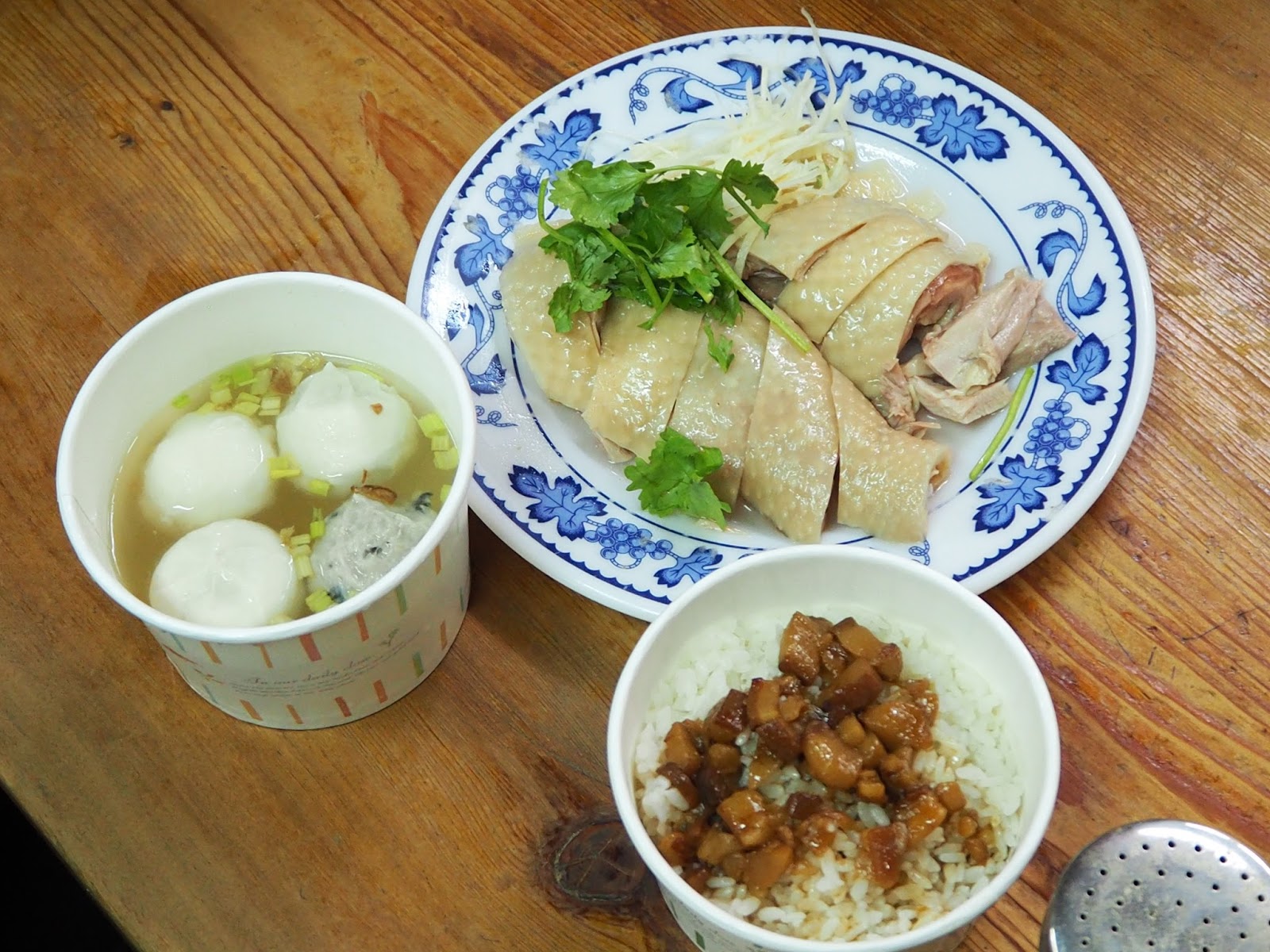
Food is a universal language that binds people together. We met this group of young Malaysia who also came all the way to try out this bai zhan ji translated as boiled and cut chicken!
*************************************************
Ah Chung Rice Floor Noodle.
Ximending: T.K.K Friend Chicken.
Shilin Night Market

Sunday, May 28, 2017

Touch & Go to Japan

Going for another cruise was not our original plan in 2017. My badminton buddy who had earlier signed up for a cruise to Japan suggested in late March that I should consider signing up and join the gang which I did.

We had our first cruise experience in late March 2013 with cruise ship Voyager of the Seas. That cruise ship which was operated by Royal Caribbean could accommodate almost 3,200 guests. The cruise ship Sapphire Princess which took us to Japan is slightly smaller. It can accommodate close to 2,700 guests. For this cruise, we were allocated a much better room - a room with balcony at mid section at port side, Level 10. Together with other tour members, we flew to Taipei on 17 May 2017 to commence our cruise to Okinawa and Oshigaki from Keelung Port, Taipei.
Sapphire Princess
Upon disembarkation from the ship after docking at Okinawa Port at 4pm on 18 May, we joined a cruise-recommended local tour. We were taken to just two spots, the Shuroji Castle and Kokusai Street.

Shuroji Castle, declared a Unesco World Heritage Site in year 2000 was the imperial palace of the Ryukyu Kingdom from 1429  to 1879. Unlike traditional Japanese castles, Shuroji Castle is very much influenced by Chinese architecture.

The castle which was destroyed in World War 2 in 1945 by the American warship, USS Mississippi was rebuilt in 1950 to serve as the University of Ryukyu. Since then, it has undergone numerous reconstructions. In 1992, it was fully restored to its current condition.
Old castle wall and entrance.
Shuroji Castle.
This red building constructed at the right of the main palace served as guest house for dignitaries and visitors from China during the Ryukyu Kingdom.
Japanese dancers performers at makeshift tent 
to entertain visitors/tourist.
At Kokusai Street, our local Japanese Guide suggested a visit to the local wet and dry market. Somewhat tired of shopping, we thought it was a good idea to have a look at the market, a place where locals do their marketing. In the end, out of the twenty plus tour members, only two coupes including ourselves were interested. The rest preferred to explore Kokusai Street on their own.
*************************************************
Our tour bus picked us from the pre-designated point at 7.30pm and by 8pm, we were back to the ship. That was our four hours tour of Japan!

We were scheduled to visit another Japanese island, Oshigaki in the next morning. Oshigaki does not have a big enough port for the cruise ship to berth. The ship had to anchor at a distance off-shore. Visitors were supposed to be shuttered to and fro from the cruise ship to the island. Unfortunately, the Captain decided to cancel shuttering of all visitors to the island because of forecast bad weather and high waves. Our visit to the Oshigaki did not materialize!

Our visit to Japan is best described as a touch and go experience!

Thursday, May 11, 2017

Surprise Visit to Singapore

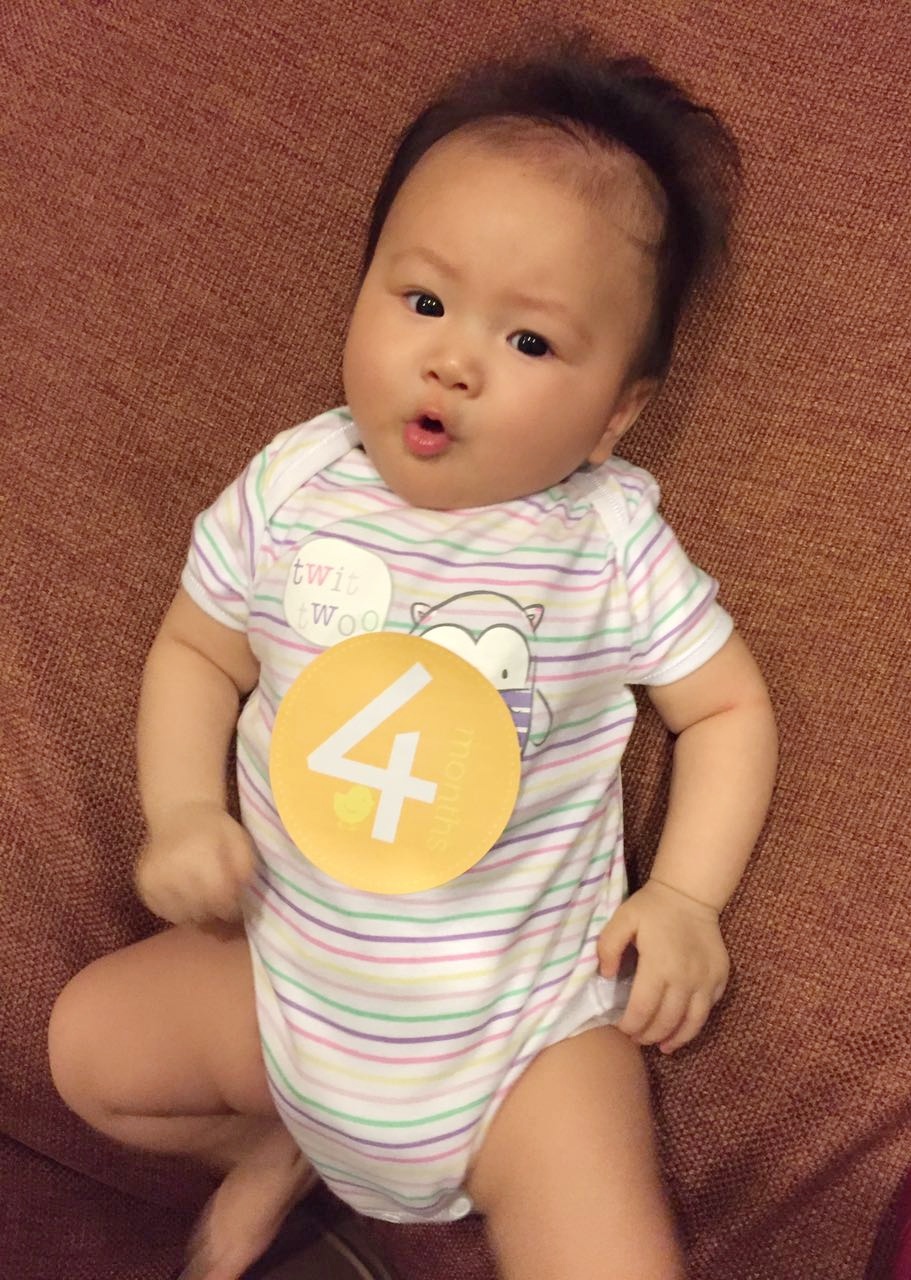
My grand daughter. Livvie in Singapore turned four months on 4 May 2017. This little fellow is really growing very fast. Both her weight and height are much higher than the normal child of her age.

So, we decided to have a surprise visit to see her before she start rolling over on her belly and then start crawling............
It takes a bit of time to get used to a
granddad last seen in an ipad screen!
Quite beyond my imagination to see my son
in full gear as a newly-crowned dad.

Monday, May 01, 2017

Vietnamese Ca Phe

A friend reminded us to look out for egg coffee in Hanoi. We soon found a coffee/tea outlet cum restaurant just a short distance from our hotel which served this unique concoction. Without hesitation, we immediately went in and placed an order. It took the girl a solid 10 minutes to prepare the drink. It was frothy and creamy. It was mildly sweet and juxtaposed with the mild bitter taste of coffee! A unique coffee experience!

We learnt from the local guide for our City Tour that the correct spelling in Vietnamese for Coffee is Ca Phe.

Coffee is big business in Vietnam. Since its introduction by the French in the mid-1800's, the coffee industry has developed by leaps and bounds. It is now ranked second only to rice in value as an agricultural product exported from Vietnam.
Many flavors and varieties to choose from in one of the many
coffee outlets in  the city centre.
******************************************************
Coffee is truly a common universal language. We met a middle-aged Thai lady in the coffee/tea house. She is a solo traveler using bicycle as her major mode of transport. Her adventurous spirit is truly admirable and inspiring!