Our journey wasn’t limited to exploring old castles, chapels, and charming historic villages. From time to time, we
switched gears and immersed ourselves in the natural beauty of parks and gardens, offering a refreshing contrast to the weight of history.
One such highlight was the Westonbirt National Arboretum in Tetbury, which lies just a short walk - less than a kilometre - from the Hare & Hounds Hotel, where we were staying. True to the definition of an arboretum, Westonbirt is a botanical haven dedicated to the cultivation and display of woody plants and trees, forming a living collection that has been carefully curated since the mid-19th century.
Today, it is regarded as one of the finest tree collections in the world, home to thousands of species from across the globe. During our visit, the arboretum had just completed another phase of major upgrading works, enhancing both the visitor experience and the long-term care of its vast collection.
The peaceful walk among towering trees and vibrant foliage was a rejuvenating break from our historical sightseeing - offering not only beauty, but a reminder of nature’s enduring power to inspire.


*************************************************
Hidcote Manor Garden, located in the village of
Hidcote Bartrim near
Chipping Campden, Gloucestershire, is regarded as one of the finest examples of
Arts and Crafts gardens in Britain.
The Hidcote Manor Estate was first purchased in the early 1900s by Mrs. Gertrude Winthrop, an American woman of independent means. It was her son, Lawrence Johnston, who would go on to transform the surrounding fields into a garden of exceptional beauty and structure. A passionate plantsman with a meticulous eye for design, Johnston began laying out the key features of the garden around 1910.
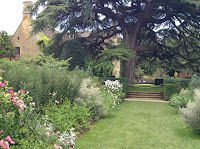
By the 1920s, his vision had expanded so extensively that he employed a team of 12 full-time gardeners to maintain the intricate layout and diverse plantings. The garden became known for its series of outdoor "rooms", each with its own character, enclosed by hedges or stone walls and filled with carefully selected plants.
In 1947, after decades of devotion to Hidcote, Johnston entrusted the estate to the National Trust, ensuring its preservation for future generations to enjoy. Today, Hidcote remains a treasured destination for garden lovers, admired not only for its beauty but also for the creativity and discipline behind its design.




*************************************************
The Topiary Garden at Levens Hall, located on the southern edge of the English Lake District, is widely regarded as the finest, oldest, and most extensive topiary garden in the world. Originally designed in the late 17th century by French gardener Guillame Beaumont, who had trained under the celebrated landscape artist Andre Le Notre, the garden remains a living masterpiece of formal horticulture.
Hundreds of yew and boxwood specimens are meticulously clipped, trimmed, and sculpted into a dazzling variety of shapes - ranging from abstract forms and spirals to animals, geometric figures, and whimsical designs. Each topiary is unique, showcasing not only the creative vision of its caretakers but also the incredible patience and precision required to maintain such living art.
Some of the plants soar to heights exceeding 30 feet, making their maintenance a formidable task. It takes a combination of expert skill, years of experience, and the use of specialized equipment and heavy machinery to keep these towering green sculptures in pristine shape.
Walking through the garden feels like stepping into a surreal world - where nature is disciplined into extraordinary form, and history is preserved through living tradition.