Tuesday, May 01, 2018

Revisit Southwest WA: First Stop at Dunsborough

We last visited Perth in July 2016. After a lapse of almost two years and taking advantage of WA school holidays, we decided to pay another visit to Perth in April 2018. We also planned to do another driving tour.

For the road trip, I had originally wanted to look at the Super Pit in Kalgoorlie but had to forego the idea when I discovered all local guided tours to the Pit for 2018 school holidays seasons had been fully booked well in advance. Our next choice was Monkey Mia to do the well publicized dolphins watching at the sea shore. This idea was also abandoned after considering the long isolated "boring" route from Perth to this destination and the very limited things that we would find interesting to do and to see at this far far away place. That left the south-western part of WA.

It's been more than fifteen years since I last visited the southwest of WA in August 2002. We took a tour to the southwest just before attending my daughter's graduation in Curtin University then. This time, we took a slightly different route, but still kept Augusta, Walpole and Albany in the itinerary.

Our first stop was Dunsborough, a place we bypassed in our previous trips. A one night stop enabled us to have a feel of this little coastal town. In the little park by the sea at the town, we discovered that Dunsborough is a strategic place for cycling enthusiasts. One can rent a bike and cycle northwards to Busselton (30Km) or a bit further to Rockingham (216Km) or further still to Perth (252Km).
While in Dunsborough, we spent an afternoon exploring the nearby Castle Bay and Eagle Bay in the Margaret Region.
Castle Bay
Castle Rock , a massive chunk of orange granite 
protruding out to the sea. This is considered to be 
a spectacular attraction of this scenic spot.
Popular for anglers.
A whaling station once operated from this bay from year 
1835. This is built to commemorate this bit of history.
Eagle Bay

Saturday, March 31, 2018

KK Wetlands

The Sabah World Water Day 2-Day Conference held on 21-22 March 2018 ended with a visit to the KK Wetlands. Many might find this name unfamiliar and are used to its old names - the Likas Swamp, Likas Mangrove or the KK City Bird Sanctuary. 

I felt a bit guilty that I had traveled thousands of miles to see other similar wetlands (Read here) and (Taman Paya Bakau) but failed to pay a visit to one which is situated at my home city's backyard. This is a mere 2.9Km away from KK city centre just behind the Signal Hill where the city clock tower is situated.

The site covers 24 hectares of mangrove forest and is traversed by a 1.5Km of boardwalk. An hour of slow walk along the boardwalk allows one to enjoy fresh sir and tranquility. At the same time, it provides a pleasant experience of looking at birds, plants and wildlife.

Wednesday, March 28, 2018

The Swing Team: February 2018

Part of the Swing Team gathered on 15 February 2018 for another photo shoot. This was made possible because of the occasion of the marriage of two of the original members - Tai Tai and Wan Wan.

The pioneer Swing Team was first captured in 1984, almost 34 years ago (Read here), I have since watched with amazement how the membership has blossomed and multiplied. It has moved from Gen X & Y to Gen Z. Many have since got married and have children of their own and some have moved overseas to live in other parts of the world. Of course, the single major event was the passing of the patriarch just under three years ago.

Over the years when more and more members of the families move overseas to settle down, it takes creativity to gather them to meet up again. The new couples were ingenious to choose the occasion of CNY to celebrate their marriages. That made it so much easier for the get-together for the whole gang. After all, it is a Chinese tradition for family members to come together for the annual reunion.
The Tea Ceremony.
Baby Boomer Generation.
Baby Boomers, Gen X,Y and Gen Z.
Toast to the new couples!
With the new couple, Shu Hong & Shakti.
With the new couple Sophia & Simon.
*************************************************
The reunion ended with a BBQ at the matriarch's home. The Lim's also set a new record when the English educated led the singing of Chinese new year songs. It was quite a surprise that the ambient that night had liberated the perceived conservative seniors into a group of vibrant singers and dancers.

Everyone had a good time. For sure, this will be remembered for a very very long time especially the family of the new couples.

Saturday, March 24, 2018

Christmas 2017 Photo Shoots

The Studio finally delivered all the photos to me on 24 March 2018 which we took on 22 December 2017, just two days shy of three months.

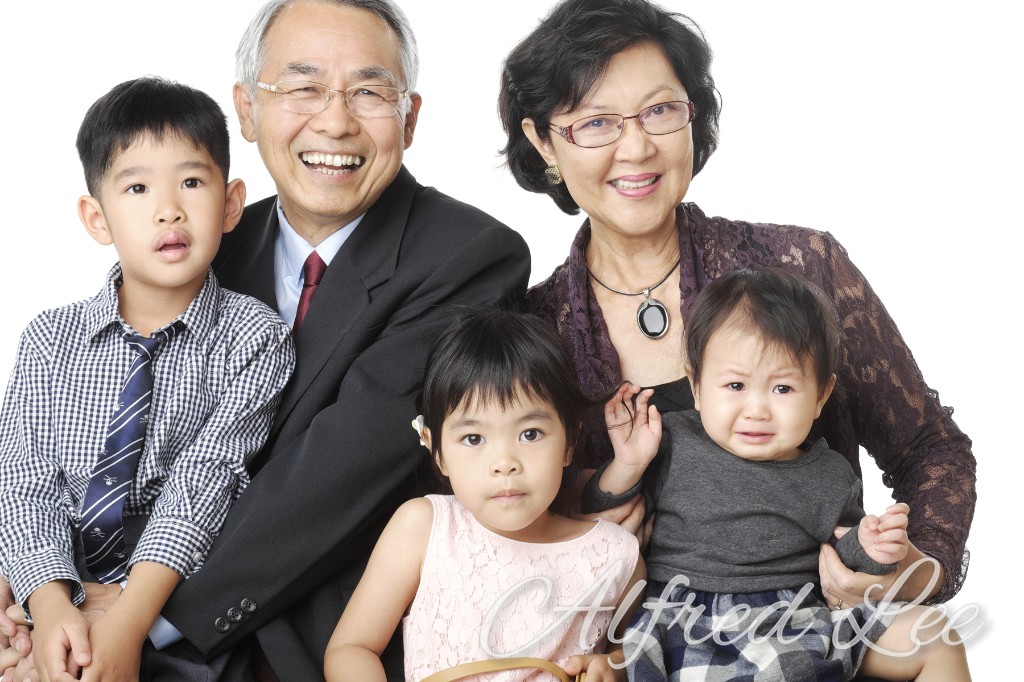
It is extremely rare for every member of the family to be able to gather and meet as a whole family. So, when we managed to meet as a complete family last Christmas, we decided to have photo shoot by a professional photographer, Louis Pang. 

It was a fun experience except for the little one. Even with super fast snapping speed by the cameraman, her teary poses could not be avoided. One day in the future when she looks back, she might exclaim, "Why didn't I hold my crisp smile just for a teeny-weeny five seconds longer!". Well, that's part and parcel of growing pain.

Monday, February 19, 2018

Chineseness

Shortly after our Company Annual Lunch on 12.03.2018, I was driving back to the office with one of my staff members, Terence when our conversation turned to Chinese New Year traditions. To my surprise, I discovered that many customs commonly practiced before the 1970s are still very much alive in his family today.

This staff member, who is of mixed heritage - a Sino, with a Chinese father and a Kadazan mother - still observes several traditional rituals during Chinese New Year. Among them: taking a bath on New Year's Eve with water boiled with pomelo leaves, refraining from the use of foul language throughout the CNY celebrations, and avoiding sweeping the floor on the first day of the new year.

What amazed me was how enduring these beliefs remain. The ritual bath with pomelo leaf-infused water, meant to cleanse away bad luck and repel evil spirits, continues to be observed with sincerity. Equally fascinating is the taboo against sweeping on the first day of the new year, rooted in the fear of inadvertently sweeping away incoming fortune and prosperity. It’s remarkable to see how these deeply rooted traditions persist even in mixed-cultural households, standing as a testament to the enduring power of ancestral customs.

This year, we celebrated Chinese New Year in Batu Pahat, staying at a homestay in a quiet housing estate near Sri Gading. As the clock struck midnight on Chinese New Year’s Eve, the celebrations erupted with a familiar frenzy - firecrackers began exploding at the house next door and soon echoed throughout the entire neighborhood. The sky lit up with flashes and booms, and for the next hour, any hope of sleep was futile.

Although firecrackers are officially banned in Malaysia, their absence has never truly been enforced. Not a single year has passed in Malaysian history without the sound and spectacle of firecrackers ushering in the new year. One way or another - by hook or by crook - some Chinese families always manage to get their hands on them. For many, the very thought of celebrating Chinese New Year without firecrackers is unthinkable. It’s more than just noise and light; it's a cultural symbol believed to drive away evil spirits and welcome prosperity with a bang.

In the end, I found myself circling back to a fundamental question: What defines a Chinese person? Is it purely genetics? Are you Chinese simply because you carry Chinese DNA? Many would argue that this is too simplistic a definition.

A more meaningful answer might be: A Chinese is someone who consciously preserves and practices Chinese culture, traditions, and values - even those that may seem outdated or irrelevant in today's fast-paced, technology-driven world. But this raises another question: if a non-Chinese embraces and faithfully upholds all these customs and traditions, can they be considered Chinese too?

This dilemma becomes even more personal when you start feeling that your own sense of Chineseness - your cultural identity - is slowly slipping away. That very feeling often sparks a deeper urgency to hold on to what's left: the language, the rituals, the symbols, the stories passed down through generations. Perhaps this is why Chinese culture has proven so remarkably resilient. Despite political pressures, restrictive legislation, or even attempts at cultural assimilation, it continues to thrive - adapting, resisting, and persisting.

Yet it’s important to remember that Chineseness is not something fixed or frozen in time. It is not a static identity. Like all cultures, it evolves - quietly reshaping itself through each generation, blending with new influences while still holding on to its roots. And perhaps that fluidity is the secret to its endurance.

Decorating trees with angpow is a fairly new 
phenomenon, probably borrowed from the idea 
of decorating a Christmas tree. 

Thursday, February 01, 2018

Lunar Eclipse & Blood Moon

In the days leading up to 31.01.2018, social media and news platforms were abuzz with excitement over an extraordinary astronomical event - a rare convergence of three lunar phenomena: a supermoon, a blue moon, and a total lunar eclipse, also known as a blood moon. This remarkable alignment had not been witnessed for 152 years, with the last occurrence dating back to 31.03.1866.

A supermoon occurs when the full moon is at its closest point to Earth in its elliptical orbit - approximately 360,199 km away, compared to the average distance of 382,900 km. At this proximity, the moon appears about 14% larger and 30% brighter than usual. It was also a blue moon, the term given to the second full moon in a single calendar month. The third phenomenon - a total lunar eclipse - happens when the Earth aligns directly between the sun and the moon, casting a shadow over the moon. The eerie red hue of the blood moon is the result of sunlight passing through the Earth’s atmosphere; the shorter blue wavelengths are scattered while the longer red and orange wavelengths are refracted and projected onto the moon's surface.

Not wanting to miss this once-in-a-lifetime celestial spectacle, we joined the enthusiastic crowd at Yayasan Sabah, where the event was co-organized by the Sabah Stargazers.

There, we had the good fortune of meeting an experienced stargazer who had brought along a powerful telescope. He generously allowed strangers to peer through it and even shared his phone contact with many of us. Through his updates, we were able to follow all the phases of the eclipse as it unfolded - a gesture that truly enhanced the magic of the night.

The stargazer who shared all the sightings
with the public,
Time at 20:10
Time at 20:36
Time at 20:45 - Beginning of Blood Moon.
Time at 20:52
Time at 20:57
Time at 21:25 - Full Eclipse
Time at 21:36
Time at 22:14