Saturday, October 11, 2014

Cambridge University

In the 1960s, Cambridge University was synonymous with quality education across many Commonwealth countries. This reputation was largely due to the fact that secondary school assessment examinations were conducted in collaboration with the Cambridge University Local Examinations Syndicate, lending international credibility and prestige to its name.

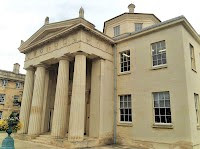
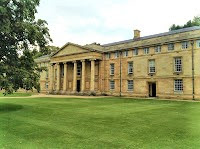
For me, it was a dream come true to finally set foot on the grounds of this historic and distinguished institution. With the help of two postgraduate students who graciously acted as our guides, we were able to access several of the university’s renowned colleges - some of which are usually closed to the public. Among them were King’s College, with its breathtaking chapel and majestic grounds; Trinity College, known for its rich academic legacy and notable alumni; and Downing College, with its elegant neoclassical architecture.

The experience was nothing short of inspiring, offering a rare glimpse into a place where generations of great thinkers, writers, and scientists once walked and studied.

The iconic view of Cambridge University
*************************************************************
King's College Chapel
************************************************************
Dining Hall of Trinity's College
Cambridge University boasts an extraordinary list of notable alumni, many of whom have left a profound impact on the world. Among the most iconic is Sir Isaac Newton, whose groundbreaking work in mathematics and physics laid the foundation for classical mechanics. Over the centuries, the university has continued to be a cradle of innovation and excellence.

To date, more than 90 Nobel Laureates have been affiliated with Cambridge - either as students, researchers, or faculty - spanning fields such as physics, chemistry, medicine, economics, literature, and peace. This remarkable record stands as a testament to the university's enduring legacy as one of the world’s foremost centers of learning and discovery.
************************************************************
Downing College
**************************************************************
***********************************************************
We were introduced to this lady (seated between us in the photo) by Rachel. Originally from Tawau, Sabah, she was eager to reconnect with fellow Sabahans after having been away from home for over 30 years. Now a long-time resident of Cambridge, she warmly welcomed the opportunity to meet us.

As our conversation unfolded, I was pleasantly surprised to discover that she is the sister of one of the directors of 2001 Computer (M) Sdn Bhd, a company based in Kota Kinabalu. What a small world -especially when it comes to Sabah!

Heather Fields

Heather grows freely and abundantly across the Scottish countryside, blanketing hills and valleys in shades of purple and pink during its bloom. Though we were not in Scotland itself, we were fortunate to witness a similarly breathtaking landscape on our drive from Aysgarth in North Yorkshire to Cambridge.

As we journeyed through the rolling moors and open countryside, vast stretches of heather-covered land came into view - an unexpected yet spectacular sight that added a magical touch to our road trip.

Another Day - Walking Through Meadow

In the morning of 21 August 2014, we stepped out of the Field House B & B in Aysgarth to walk through the meadow.......
Another day, another moment to grasp
Another time to take the chance
Stepping out, turning round, facing something new
Being brave to make the change
Remembering nothing remains the same
Another day, another minute to chase
Another journey with new adventures to face
Breathing deep, nerves on edge, following new paths
Taking risks discovering new tasks, new friends
Becoming stronger, growing bolder, wiser
Realizing nothing will ever be the same
Another day, another place with so much to see
Another challenge, finding there is more to be
Learning, growing, forever moving on to something new
Knowing life cannot remain unchanged
Certain you will never be the same again
Another day to venture further on beyond.
~Martine Gafney~

Wednesday, October 08, 2014

Bolton Castle & Queen of Scots

A tour of a castle offers more than just scenic views - it provides a fascinating window into the lives, intrigues, and power struggles of England’s nobility in centuries past.

One such place is Bolton Castle, located in Wensleydale, North Yorkshire. Built in the 14th century by Richard le Scrope, Lord Chancellor to King Richard II, the castle stands as one of the few in England never to have been sold. Remarkably, it is still owned and maintained by the descendants of the Scrope family.

In 1568, the castle played host to a dramatic chapter in British history when Mary, Queen of Scots was held under house arrest there for six months. The then-owner, Henry Scrope, demonstrated both hospitality and duty by offering his own apartments - including both his and his wife’s bedrooms - for Mary’s use. Mary did not come alone; her entourage numbered 51 individuals, including knights, ladies-in-waiting, servants, cooks, a hairdresser, an embroiderer, a pharmacist, a physician, and even a surgeon. The scale of her household speaks volumes about her royal status, even in captivity.

Mary’s story ended in tragedy. After being implicated in a plot to assassinate her cousin and political rival, Queen Elizabeth I, she was tried and convicted. Elizabeth reluctantly signed the death warrant on 1 February 1587, and Mary was executed a week later, on 8 February 1587.

However, history has a way of reshaping narratives. What was once deemed treasonous can, through the lens of time, be seen differently. Mary is now often portrayed not simply as a conspirator, but as a tragic figure - a queen outmaneuvered by court politics and the ambitions of powerful men. Her failure is viewed less as a result of personal shortcomings and more as a consequence of impossible circumstances.

Today, both Mary and Elizabeth lie in Westminster Abbey, symbolic of their intertwined legacies. History has grown somewhat kinder to Mary, recognizing her as a victim of manipulation, betrayal, and the brutal politics of her time - a dynamic that, interestingly, still resonates in today’s political world.

Toilet.
During her house arrest at Bolton Castle, Mary, Queen of Scots was accommodated in the bedchamber originally used by the Lady of the Castle. This space, once reserved for nobility, became her temporary sanctuary.

In those times, it was common for servants - both male and female - to sleep in the same room as their masters or mistresses. People generally disliked sleeping alone, and privacy was a luxury reserved only for the highest-ranking individuals. Within the chamber, only the most important person, such as Mary herself, would have had the privilege of sleeping in the bed.

The rest of the household - ladies-in-waiting, attendants, or bodyguards - would have had to make do with more modest arrangements. Some would have slept on simple mattresses laid near the hearth, while others would curl up on the stone floor, wrapped in cloaks or blankets, taking warmth from the fire and shelter from the drafty stone walls.

Such sleeping arrangements highlight the stark contrast in status and comfort, even within the same room - a glimpse into the hierarchy and domestic life of the aristocracy in the 16th century.

The Master of the Castle’s bedchamber was located one floor above that of the Lady’s - an arrangement that reflected his superior status within the household. In many ways, it was the medieval equivalent of a penthouse suite in a modern residential condominium - offering greater privacy, elevated views, and the most prestigious location within the castle.

This upper-floor chamber would have likely been larger, better appointed, and slightly warmer, capturing what little heat rose through the thick stone walls. Its placement also symbolized both authority and hierarchy, as even the physical layout of the castle reinforced social order.
********************************************************
The small room adjacent to the chapel was reserved for the Abbot, the spiritual head of the religious community. Modest in size and sparsely furnished, the room reflects the simplicity and solitude that often characterized the Abbot's life. Its quiet, unadorned setting suggests a life devoted to prayer, reflection, and discipline - removed from the comforts and social privileges enjoyed by the nobility.

The room’s proximity to the chapel also underscores the Abbot’s central role in the spiritual life of the castle, always close to the sacred space where he would have conducted daily prayers and services.
********************************************************
The dungeon was the designated holding place for prisoners - a cold, dark pit carved directly out of solid rock. Measuring approximately 4m long, 3m wide, and 3.5m high, it was a harsh and unforgiving space designed more for confinement than compassion.

The only "amenity" provided was a crude latrine, offering minimal relief in an otherwise bleak environment. Prisoners were lowered into the chamber by rope, then abandoned to their fate with little to no contact from the outside world. There was no light, no bedding, and no sense of time - only isolation and suffering.

A grim story circulates about a piece of an arm bone found still manacled to the wall, a chilling reminder of the dungeon's brutal reality. Whether legend or fact, such tales lend weight to the belief that many prisoners never left this place alive.
*********************************************************
Castle residents drew water from the well dug at one corner of the castle.
Unfortunately, we didn’t have the chance to explore or get "lost" in the labyrinth outside the castle, as it was raining during our visit. The wet weather kept us from enjoying what would have been a charming and whimsical part of the castle grounds.

Award Winning Public Toilet in Tetbury

Whenever we drove through the countryside or along quiet rural roads in search of a town to explore, we always looked out for a spire. These tall, pointed structures often serve as reliable indicators of a town’s historical significance and relative size - a legacy of the time when the church stood at the heart of every community.

One such spire that caught our attention was that of the Church of St. Mary the Virgin and St. Mary Magdalen in Tetbury. Towering above the surrounding landscape, it was visible from miles away and guided us into the heart of the town.

However, what truly left an impression on me was not the church - but a modest sign displayed on a building: "Award-Winning Public Toilets."

Was it a luxurious restroom on par with those in a five-star hotel? Not quite. But it was spotlessly clean, smoke-free, and featured a surprisingly clever touch of innovation. A recessed wash basin was installed along one wall, equipped with sensor-activated soap dispensers and taps. No need to press buttons or turn handles - everything was automatic.

It wasn’t extravagant, but it was efficient, hygienic, and resource-conscious. Perhaps it was this quiet practicality - prioritizing functionality and sustainability - that earned it the award. In its own humble way, the Tetbury public toilet was a charming example of how thoughtful design can elevate even the most ordinary experiences.

*********************************************************
Church of St. Mary the Virgin and St. Mary Magdalen in Tetbury
************************************************************
Has this Church been graced by "royals"? This tree found at the back of the Church was planted by Camilla Parker Bowles, Duchess of Cornwall on 3 May 2011 to commemorate the occasion of the marriage of Kate Middleton to Prince William.

Tuesday, October 07, 2014

Bridge Story

On our journey from Levens in the Lake District to Aysgarth in North Yorkshire, nature suddenly called - and rather urgently. We found ourselves in the all-too-familiar travel predicament of desperately searching for a public toilet, with none in sight.

To our dismay, this stretch of the English countryside turned out to be rather unforgiving in that department. After scanning every layby and small village in vain, we were left with no choice but to respond to nature’s call the old-fashioned way - in the open field.

And so, somewhere by the roadside, overlooking a long and lonely bridge, we did the unthinkable. It was an undignified but necessary moment, and one that now lives on in our travel memories - humbling, slightly embarrassing, but undeniably human.

************************************************************
Just before leaving Windermere for Aysgarth, we stopped by this picturesque old bridge.
************************************************************
The couple who run Field House B&B in Aysgarth strongly recommended that we visit the nearby Aysgarth Falls - a natural attraction they felt should not be missed. Taking their advice to heart, we set off on a leisurely walk that led us through open grazing fields, with sheep dotting the landscape and rolling hills all around.

After a pleasant trek, we arrived at the falls, and just downstream, we came across this charming stone bridge - a picturesque crossing that perfectly complemented the serene beauty of the area. The sound of rushing water, the lush greenery, and the peaceful surroundings made the entire detour well worth the effort.

View of the waterfall from the bridge.
Access to the waterfall is by way of depositing a one pound coin into the unmanned Honesty Box.