Thursday, October 20, 2016

Pulai, Gua Musang in Kelantan

Our round trip driving tour to Terengganu and Kelantan covered a total distance of some 1,350 Km. We passed through Pahang and stopped for our first break in Bentong before proceeding to Kuala Gandah Elephant Conservation Centre to look at the elephants.
We spent a night at Cukai (now renamed Kemaman) which was our first stop in Terengganu. From Cukai, we took the coastal road passing through Kerteh, Paka, Dungun, Marang and then to Kuala Terengganu. After two nights in Terengganu, we moved on to Kota Bharu in Kelantan. The trip ended after two days stay in Kota Bharu.

Since the distance from Kota Bharu to KL is 440 Km which could be too demanding to drive at one go, we decided to take a break and spend a night in Gua Musang. From Kota Bharu to Gua Musang, we also took a detour to Rantau Panjang, a border town at the Thai border at the northern boundary of Kelantan.

As it turned out, my greatest surprise was Gua Musang, a name synonymous with Tengku Razaleigh Hamzah, the MP for Gua Musang. This is because of Tengku Razaleigh long history as an MP for Gua Musang. He is the incumbent MP since 1986, his 7th term since he won in the 7th Parliamentary Election in 1986.

When I asked the Inn Keeper in Gua Musang for interesting places to visit, without hesitation, he recommended a little town called Pulai, 14 Km away.

Pulai, tucked away in the middle of Malaya Penisular and next to a small river Sungai Galas is a Chinese settlement. According to the chap I had a lengthy chat with, Chinese in Pulai is 99.9% Hakka. Their Hakka accent as I discovered first hand is identical to the spoken Hakka in Sabah. The Hakka in Sabah and the Hakka in Pulai all came from the same villages in mainland China!

As told, the Chinese Hakka came to Pulai from the period of the Ming Dynasty (1368 - 1662) in the reign of Emperor Jiaqing of the Qing Dynasty (1796 - 1820). This Chinese settlement is said to be at least 600 years old. The chap I talked to claimed to be the 7th generation resident. Assuming 30 years per generation, his ancestors would probably first set foot on Pulai some 200 years ago.

Like all Chinese immigrants who chose to settle in new found land, they made their way deep inland by boats along rivers. One could imagine how the first settlers set sail from the river mouth of Kelantan River and moved upstream to Galas River until Pulai. These immigrants came here for gold! This story has many similarities to what my maternal grandfather went through when he went to work in Sungai Lembing Tin Mine (Read here).

Settlers in Pulai had had a fair share of traumatic lives. During the Malayan Communist Insurgency (1940 - 1960), all the Chinese were forced to relocate from Pulai and settled elsewhere. It was only until 1967 that they were allowed to come back. By then the only Chinese Temple built in the 1940's had collapsed. This was then rebuilt from scratch.

The Chinese Temple called the Shui Yue Temple (or Swee Nyet Temple in Hakka) is now declared by the Government as a historical building. The Government allocated RM200,000 in 2007 to help in the restoration work. Lives of the local residents of this community literally centre around this Temple. The Temple Committee organizes annual and seasonal events to cater for the religious and social needs of the people. All communal meals are prepared and cooked in the Temple premise. However, as the chap claimed, no woman has been allowed into the Temple kitchen as it is forbidden by tradition. Hence the foods are all cooked by men! But this tradition is in for change. There is plan to build a new kitchen that permits women to cook!

Chinese here are mostly rubber estate owners or they work in the oil palms plantations nearby. The Chinese hardly do the actual rubber tapping these days but leave that to the Thais workers whom they employ.
The only Chinese Primary School.
Residents gathered to commemorate the
ground breaking ceremony to rebuild
the collapsed Temple in May 1967
Much of the interior and exterior finishes and ornamental works of the restored Temple were done by craftsmen in China. They were then shipped and transported here for installation.
Ornamental carvings of Guan Gong and
Chang Fei on main entrance doors.
7th generation Chinese Hakka who is
a committee
member of the Temple.
There are not many choices of good Chinese food in Gua Musang. Our Inn Keeper was very obliging to tell us where to have good Chinese food. True to his recommendation, Kedai Makan 888 proved to be able to come up with good and tasty dishes.

Another interesting feature among the Chinese businessmen and traders is their preference to choose a number for their outlets or eateries! You will find signboards with 888, 333, 138 and so on. Choosing phonetically nice sounding numbers for business premises and cars seems to be an obsession of Chinese business people in Malaysia!

Monday, October 03, 2016

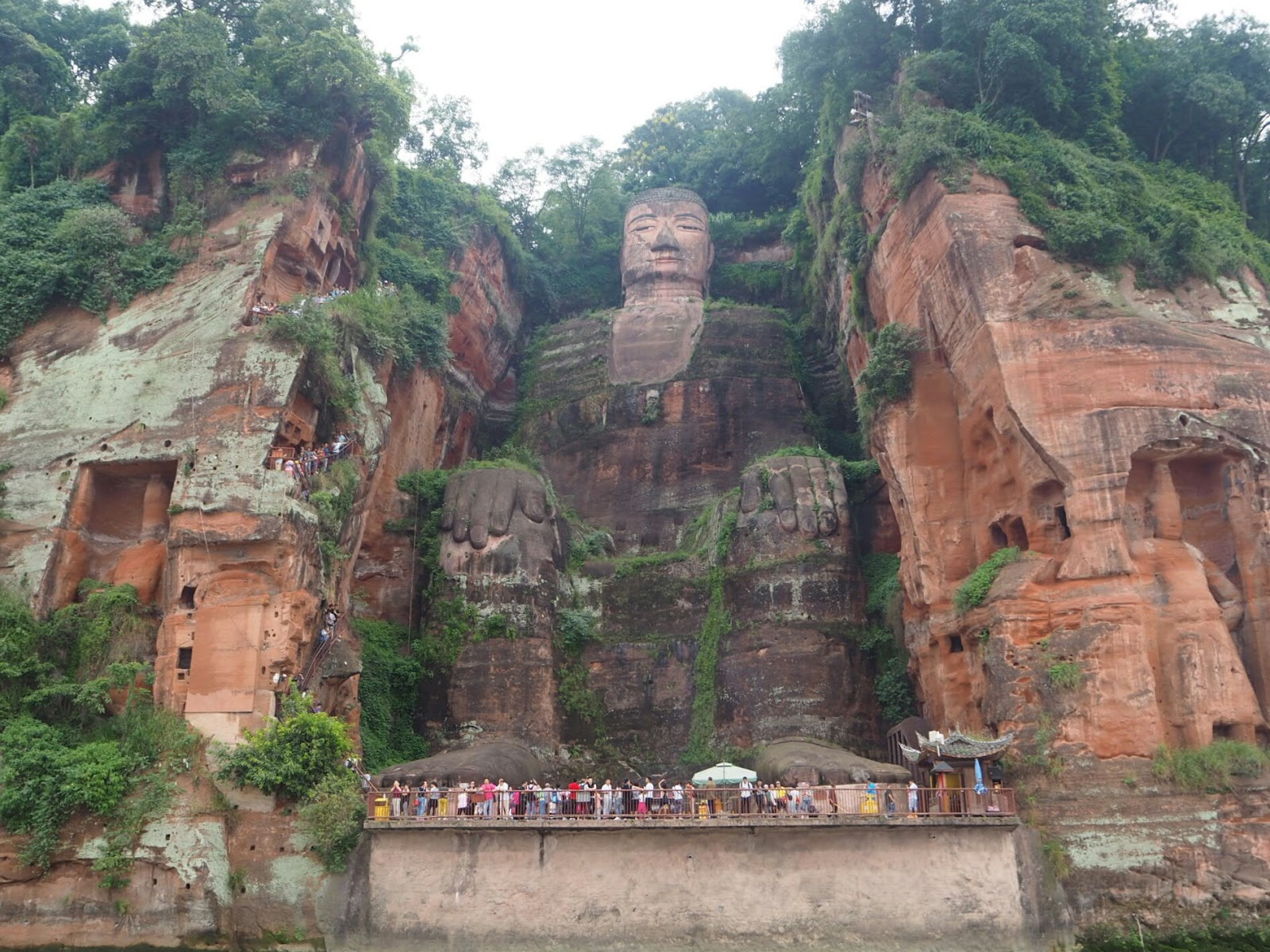
Leshan Giant Buddha, China

Have you ever wondered what a single person is capable of achieving? A visit to the Leshan Giant Buddha might just expand your perspective and offer a glimpse into the extraordinary heights of human determination, devotion, and ingenuity.

I was deeply moved by the story our tour guide shared about the origins of this colossal statue. It began with a monk named Haitong, who lived during the Tang Dynasty. Saddened by the frequent shipwrecks and loss of lives caused by the violent waters at the confluence of three rivers - the Min River, Qingyi River, and Dadu River - Haitong was inspired to carve a massive Buddha into the cliff face, facing the turbulent waters. His hope was that the serene presence of the Buddha would calm the river currents and protect those who navigated them. Construction began in 713 AD.

Legend has it that when corrupt local officials tried to siphon funds from the donations Haitong had painstakingly collected, he refused. In a dramatic act of defiance, he is said to have proclaimed that they could take his eyeball but not a single coin meant for the Buddha. When challenged, he reportedly gouged out one of his eyes and offered it to the officials - who, utterly shaken, fled and never returned. Inspired by his sincerity and unwavering commitment, more donations poured in.

Sadly, Haitong passed away before the statue was completed. However, two of his devoted disciples carried on the work, and the project was eventually completed in 803 AD by the local governor—a full 90 years after it first began.

The Leshan Giant Buddha stands at an awe-inspiring 71m high. Its head alone measures 14.7m long and 10m wide, with 1,021 intricately carved hair buns. It remains the tallest Buddha statue in the world, towering 18m higher than the Bamiyan Buddhas in Afghanistan, which were tragically destroyed by the Taliban in March 2001.

Ironically - and impressively - the construction of the statue had an unintended yet welcome effect. The massive amount of rock carved out and dumped into the river below is believed to have altered the river currents, calming the turbulent waters and making the passage safer for vessels - just as Haitong had hoped.

In ancient times, a towering 13-story wooden pavilion was built to shield the statue from the elements. Unfortunately, it was destroyed during the Mongol invasions at the end of the Yuan Dynasty. Since then, the Buddha has been exposed to rain and sun, yet it continues to endure. A testament to the engineering skills of the time, the statue features a sophisticated drainage system carved directly into its body. Hidden channels and gutters still function today, helping to prevent erosion by diverting rainwater away from the stone surface.

Most tourists experience the statue by taking a boat ride from a nearby jetty. These boats typically spend just five to ten minutes in front of the Buddha - barely enough time to capture a few photos before being ushered along. With such a short window, it's no surprise that everyone scrambles to take as many shots as possible.

For those with more time and stamina, a more immersive experience awaits. Visitors can opt to be driven to the top of the mountain, where they join a winding queue to descend the cliffside path to the base of the statue. During peak seasons, the wait time can stretch to two or even three hours - but the close-up view of the Buddha's immense form is said to be well worth the effort.

*******************************************************
A few years ago, a fascinating natural discovery drew new attention to the area surrounding the Leshan Giant Buddha. It was observed that when viewed from a distance, the three mountains behind the statue - Wuyou Mountain, Lingyun Mountain, and Guicheng Mountain -collectively resemble the form of a sleeping Buddha. This remarkable alignment was soon promoted as the "Giant Sleeping Buddha."

In this natural formation, Wuyou Mountain represents the Buddha’s head, Lingyun Mountain forms the body, and Guicheng Mountain represents the feet. Stretching across an estimated 4,000m from north to south, with the head facing north, this sleeping figure appears serene and majestic, as if carved by nature itself. The discovery has added yet another layer of wonder to the already spiritually and culturally rich landscape of Leshan.

*******************************************************
The long queue is clearly visible in long winding staircase from the top to the base.
Abstracted from 
http://www.chinadiscovery.com/sichuan/leshan/
leshan-giant-buddha.html
*******************************************************
Bamiyan Buddha before and after the destruction. 
Abstracted from https://en.wikipedia.org/wiki/
Buddhas_of_Bamiyan#/media/
File:Taller_Buddha_of_Bamiyan_
before_and_after_destruction.jpg

Sunday, October 02, 2016

Huanglong, Sicuan, China

Tourists who come to visit Jiuzhaigou most probably will do a detour to visit Huanglong as well. In the past, tourists had to take long distance buses to come to Jiuzhaigou from Chengdu. It is an 8-hour road trip. With the completion of Jiuzhai-Huanglong Airport in 2003, the flight time is only one hour.

Jiuzhai Huanglong Airport built at an elevation of +3,448m AMSL (11,310 ft) is one of the high altitude airports in the world. According to our tour guide, many flights are frequently delayed because of bad weather. Our flight on 13 September 2016 landed on schedule.

The initial stretch of the road from the airport to Huanglong is downhill and winding until it reaches a town at the valley. From then on, the road ascends uphill in a zigzag winding manner until the peak at just over +4,000m AMSL. It then descends downhill all the way to Huanglong. The view along the drive was spectacular!

The landscape and geology of Huanglong is markedly different from Jiuzhaigou. Over millions of years, the glacial effect, tufa water and climate condition created this travertine landscape in Huanglong. Travertine is a form of sedimentary rock, formed by the precipitation of carbonate minerals from solution in ground and surface water and or geothermally heated hot spring. Travertine often has a fibrous or concentric appearance and exist in white, tan, cream-coloured and even rusty varieties.
Zig-Zag winding road with multiple hair pins to Huanglong
Guest Welcome Pond at elevation 3,230m AMSL 
Guest Welcome Pond
Guest Welcome Pond at elevation 3,230m AMSL
Marvelous Flying Waterfall at
 Elevation 3,245m AMSL
Washing Cave at elevation  3,280m AMSL
Lianyan Pond at elevation 3,251m AMSL
Flying Waterfall on Lotus Platform at elevation
 3,260m AMS - 
a good example of travertine
 in rusty colour.
Golden Sand Pavement at elevation 3,305m AMSL
Bonsai Pond at elevation 3,320m AMSL
*******************************************************
Unfortunately, we were not given enough time to climb to the very top at +3,576m AMSL where the Multi-Colour Pond is situated. There are 693 ponds in this cluster of ponds.

Dazu Rock Carvings, Chongqing.

On 16 September 2016 when I visited  Dazu Rock Carvings or Dazu Baoding Mountain Rock Carvings, it was just a couple of days shy of 23 years since I last visited this place.

The most striking change at I noticed is the frontage or the entrance to this World Heritage Site. In 1993 when I visited this place with a group of Engineers from the Institution of Engineers Malaysia, the entrance was a simple stone arch with the Chinese characters "Baoding Mountain" inscribed on it. It was said that Bo Xilai during the pinnacle of his political career as Mayor of Chongqing spent billion to upgrade the entrance to its current monumental scale. He was known to focus on aesthetic development projects such as massive boulevards, monuments and large public parks. His appetite for gargantuan projects probably triggered his political downfall. The sheer size and intricacy of all the structures built for the entrance truly is mind boggling!

Back in 1993, no video recording was allowed in the Rock Carvings Site. Many staff and under-covers were assigned all over the place to warn people against doing video recording. They stopped and asked to check for any sign of recording. Recording video tape would be ripped off if they find any recording!

With the introduction of smartphones into the market in 1999, it would be impossible to enforce such rule. In any case, any posting of video of the site in the internet nowadays would be promotional materials and likely be encouraged by the Chinese to promote tourism! What a change!

It still amazed me to look at these carvings said to number over 50,000 statutes. Carved over a period of 500 years from AD650 during the Tang Dynasty up to the 12th Century, the carvings are good historical records of what people then perceived the living, the dead and the afterlife. It is the synthesis of Buddhism, Taoism and Confucianism.

While I was impressed by the "knowledge" of the tour guides as they narrated the tales and significance of all these carvings, I was wondering just how much these teachings and tales affect their belief system in China today?
Simple archway in 1993 as against 
gargantuan square and archway in 2016.
Another huge square and massive building after crossing the gigantic entrance archway.
September 1993 Vs September 2016
September 1993 Vs September 2016.
September 1993 Vs September 2016
The huge lying Bhudda was closed for renovation and restoration. It was fortunate that I can dig up my old photo to have a look of this huge rock carving.
September 2016
September 1993

Saturday, October 01, 2016

Jiuzhaigou, China

Jiuzhaigou has been so well publicized that its beauty and majesty have been compared to shangri-la or heaven on earth. With the capacity crowd of 40,000 thronging this scenic spot everyday during its peak season in August/September, its lure to visiting outsiders often heightens their imagination and fantasy!

It was drizzling when we reached the entrance of Jiuzhaigou on 14 September 2016. From the weather forecast, we were aware that we might have to tour Giuzhaigou in rainy weather condition. Still the mild rain didn't seem to dampen the spirit of all visitors queuing up to enter. In actual fact, with an average of 13 raining days in the month September from historical statistics, it is good weather that may come as a surprise.

When I saw the huge number of locals selling "raincoat shoes" at RMB10 a pair at the entrance area, I could imagine that God must be having a hard time. Every morning, tourists would pray for good weather so that they would have the best view and under the most pleasant weather condition; the "raincoat shoes" peddlers would pray that it would rain so that their sales would be good to enable them to feed their families!

Much to our relief, the crowd that morning was small and we hardly needed to queue long to enter. Still, my guess of 8,000 visitors that day was still large when compared to crowds in tourist attractions in Malaysia.
We were fortunate not among such ungodly 
number of tourists!
"Raincoat Shoes"
Jiuzhaigou or the Valley of Nine Villages falls within Tibetan territory. The area was almost destroyed by massive logging to extract timbers in the forests in the past. It was said that some scientists who went there to do research were spellbound by the beauty of the valleys that they decided to petition against the logging activity. Logging was finally banned in 1979. The area was declared as a National Park in 1982. In 1992, UNESCO declared it a World Heritage Site and a World Biosphere Reserve in 1997.

Jiuzhaigou basically is a Y-shaped configuration of rivers that meander through valleys of this mountainous terrain. Along the flow paths, you find terraces where ponds or lakes are formed. Some are simply huge expanse of wetlands and in some areas, water drops over cliffs to form waterfalls. The varieties are simply spectacular!

I would say that a minimum two days are required to fully gaze and appreciate the bulk of the natural wonders of this rivers system. We spent a mere six hours in one day and managed to see just five of them! Still, it was sufficient to make a lasting impression.
Our first stop is Long Lake in full raincoat
Long Lake at the western upper reach
 of the river system
Drizzle did not last long and we were able to remove the raincoat and took more photos in proper attire.
Multi-Colour Lake
Multi-Colour Lake
Gran Lake at the eastern upper reach
of the river system
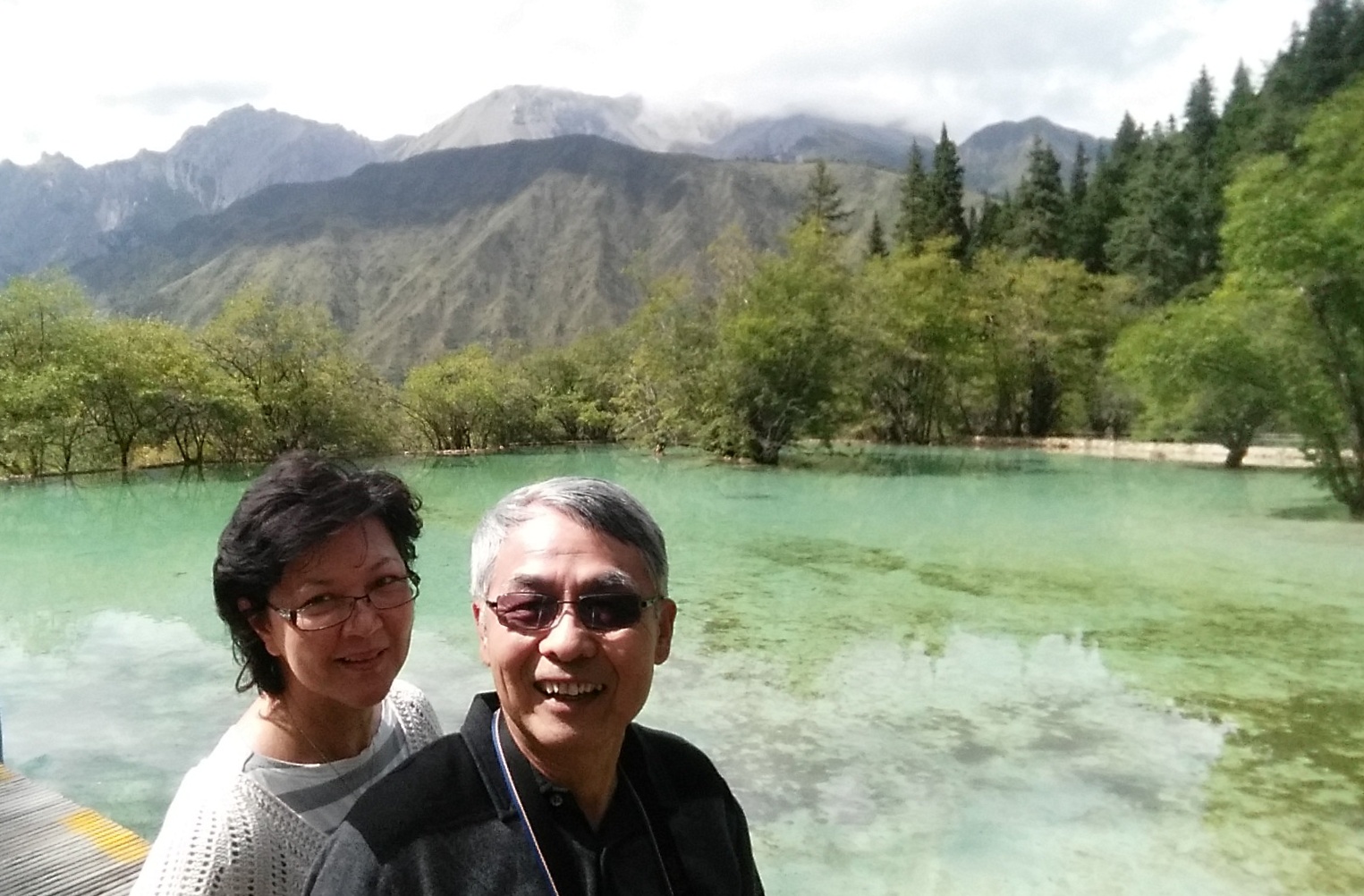
Group photo at the Gran Lake
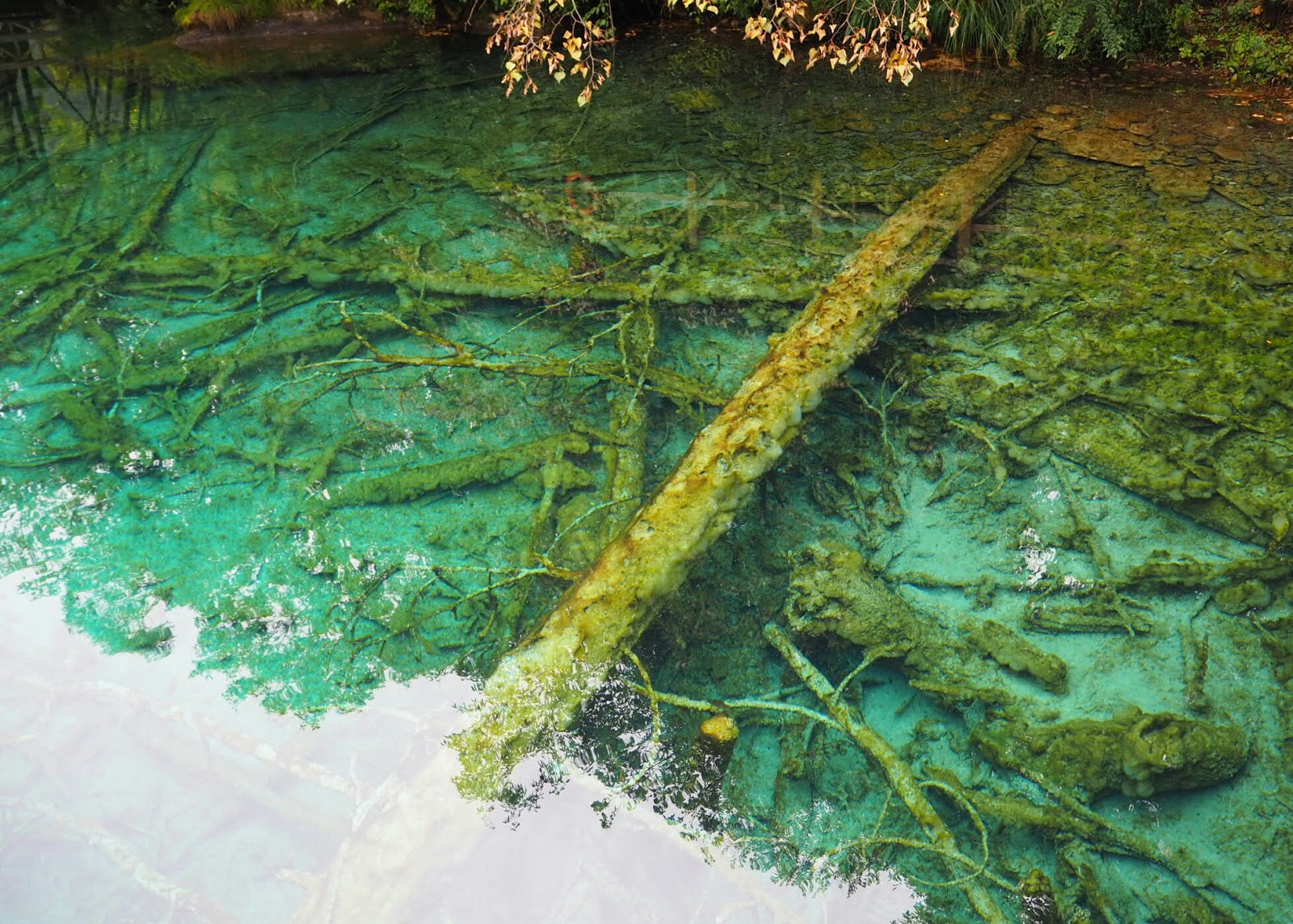
Timber logs are still visible in Gran Lake
Five Flowers Lake
Timber logs are still visible in Five Flowers Lake
*******************************************************
Jiuzhaigou has been used for a number of movie scenes and backdrops. The Flower Lake was chosen for the shoot of the epic fight of Jet Li and Tony Leung in the movie "Hero" above this lake.
************************************.******************
Overland flow upstream of Pearl Shore Waterfall
Pearl Shore Waterfall

Friday, September 30, 2016

Shimon Peres (1923 - 2016)

Barely three years ago in January 2014 (Read here), Ariel Sharon, the ex-Prime Minster of Israel passed away. Unlike Ariel Sharon, who was seen by many as a hawkish politician, Shimon Peres on the other hand was seen as a man of peace. "Peres Center for Peace" founded by him in 1996 sums up his legacy.

Future historians in looking at the Middle East will wonder what Middle East would have been like had the promoters of the Oslo Peace Accords signed in 1993 continued to helm the leadership of Israel and Palestine. Unfortunately, the peace approach was cut short after Yitzak Rabin, the then Prime Minister of Israel and a signatory of the Peace Accords was assassinated in 1995 by a Jewish extremist who opposed the Oslo Peace Accords.

Throughout history, people who dared to chart into unknown territory in order to make a difference faced great risks and adversity. Many paid the price with their own lives.

Shimon Peres once said, "The most important thing in life is to dare. The most complicated thing in life is to be afraid. The smartest thing in the world is to try to be a moral person". This probably sums up his conviction and approach for peace rather than confrontation.

He was a leader who dared make difficult decision just like what he said. "I worked with a group of people who argued day and night - professors, officials, the Minister of Finance - but there were decisions that I had to make". This statement is particularly true because I have met leader who just loves to solicit for ideas after ideas but never dares make a decision lest it may "offend" certain people or he may become unpopular. We find such kind of "leaders" among many of our politicians! What a shame!

But Shimon Peres' assessment of the Jewish people probably is the most accurate. What he said truly reflects the tenacity and endurance of this special chosen people called the Jews: "The Jews' greatest contribution to history is dissatisfaction! We are a nation born to be discontented. Whatever exists we believe can be changed for the better".

Rest in Peace Shimon Peres!